What buyers see on an adult payment processor card statement
What appears on a buyer’s card statement? Learn how Railbed’s card-provider descriptor works and how to check pending and posted charges before switching.

With Railbed, the buyer’s card statement shows the independent card provider they paid through, because that provider charges the card. It does not necessarily show your adult website’s name. Tell buyers which provider handled the payment, and check the posted transaction before promising exact wording or anonymity.
Why this matters
For an adult merchant processing more than $50,000 monthly, replacing a dropped processor means more than restoring a payment button. You need customers to recognize legitimate charges without promising statement privacy that the payment flow cannot deliver.
Railbed provides card checkout with USDC settlement for high-risk online merchants, including adult content businesses. That describes how customers pay and how merchants settle. It does not specify the descriptor, buyer verification requirements, or the steps needed to withdraw funds to a bank.
In your 2026 provider review, treat those as separate acceptance criteria. A proposal that answers only the settlement question leaves the buyer experience unresolved.
What do buyers see on an adult payment processor card statement?
Buyers see transaction information displayed by their card issuer, including a merchant or billing descriptor. Depending on the payment arrangement and issuer interface, transaction details can also include a location, contact information, or additional merchant information. Do not promise that only a single line will be visible.
The useful question is not whether a provider offers “discreet billing.” Ask what information is submitted, who controls it, and what a buyer actually sees after a charge posts.
| Buyer-facing surface | What to confirm | What it does not establish |
|---|---|---|
| Checkout disclosure | The billing name customers are told to expect | The exact layout in every bank app |
| Pending transaction | The information visible before posting | The final posted descriptor |
| Posted transaction | The billing information shown after posting | Identical presentation across all issuers |
| Expanded transaction details | Any additional merchant or contact information | That the collapsed statement line is the only disclosure |
| Receipt | The seller identity and billing explanation sent to the buyer | That the bank statement uses identical wording |
A checkout preview is not a statement preview. Review the actual payment flow and obtain the provider’s written descriptor instructions before you route customers through it.
Does the adult website’s name appear?
The website’s name can appear when it forms part of the configured descriptor or other transaction information. A different approved business or trading name does not prove that the website cannot be identified through receipts, support details, or issuer-provided information.
Ask the provider to distinguish the submitted descriptor from additional information that an issuer displays. Those are related, but they are not interchangeable.
Can buyers recognize the charge without an explicit adult brand name?
An accurate, approved billing name can help a buyer connect a charge to a purchase without repeating the website’s public branding. The provider must confirm which names are permitted and how the descriptor is configured.
Tell customers the expected billing name before payment. Do not substitute an unrelated business name or describe the transaction as something it is not.
Pending charges: check the final posted transaction
A pending authorization and a posted charge are different transaction states. The text a customer sees during authorization is not reliable proof of the final statement presentation.
For a 2026 migration, review both states rather than accepting a screenshot of a pending payment as final evidence. Ask whether the provider submits different information at different stages and whether any intermediate party appears in the buyer-facing description.
Keep support instructions specific. If a customer asks about an unfamiliar pending charge, staff should check the transaction record before identifying it as the final billing descriptor.
Posted charges: verify the submitted billing identity
The posted transaction is the statement entry you need to evaluate for billing recognition. Ask for the approved descriptor in writing, including any fixed prefix, business name, or contact element that applies to your arrangement.
Separate configuration from display. A provider can explain the information it submits, but that does not establish identical formatting in every issuer’s app or statement.
Do not advertise an exact statement appearance unless the claim matches the provider’s documented scope. Explain the expected billing name, not an unsupported promise about every bank interface.
Why statement wording varies
Statement presentation depends on more than the name you type into a dashboard. Use these factors to structure your provider questions:
- Billing identity: Confirm which legal name, trading name, or approved descriptor is attached to the transaction.
- Payment arrangement: Identify which parties submit transaction information and whether their names appear.
- Transaction state: Check pending authorization information separately from the posted charge.
- Issuer presentation: Review the main statement line and expanded transaction details rather than assuming they match.
- Descriptor configuration: Establish whether wording is fixed, configurable, or subject to approval.
- Customer communication: Keep checkout disclosures, receipts, and support explanations consistent with the approved billing name.
A provider should distinguish what it controls from what the issuer displays. Reject a statement-privacy promise that does not make that distinction.
How do you verify the descriptor before switching providers?
Use a documented review rather than a verbal assurance. For your 2026 switch, assign an owner to each check and retain the provider’s answers with the payment agreement.
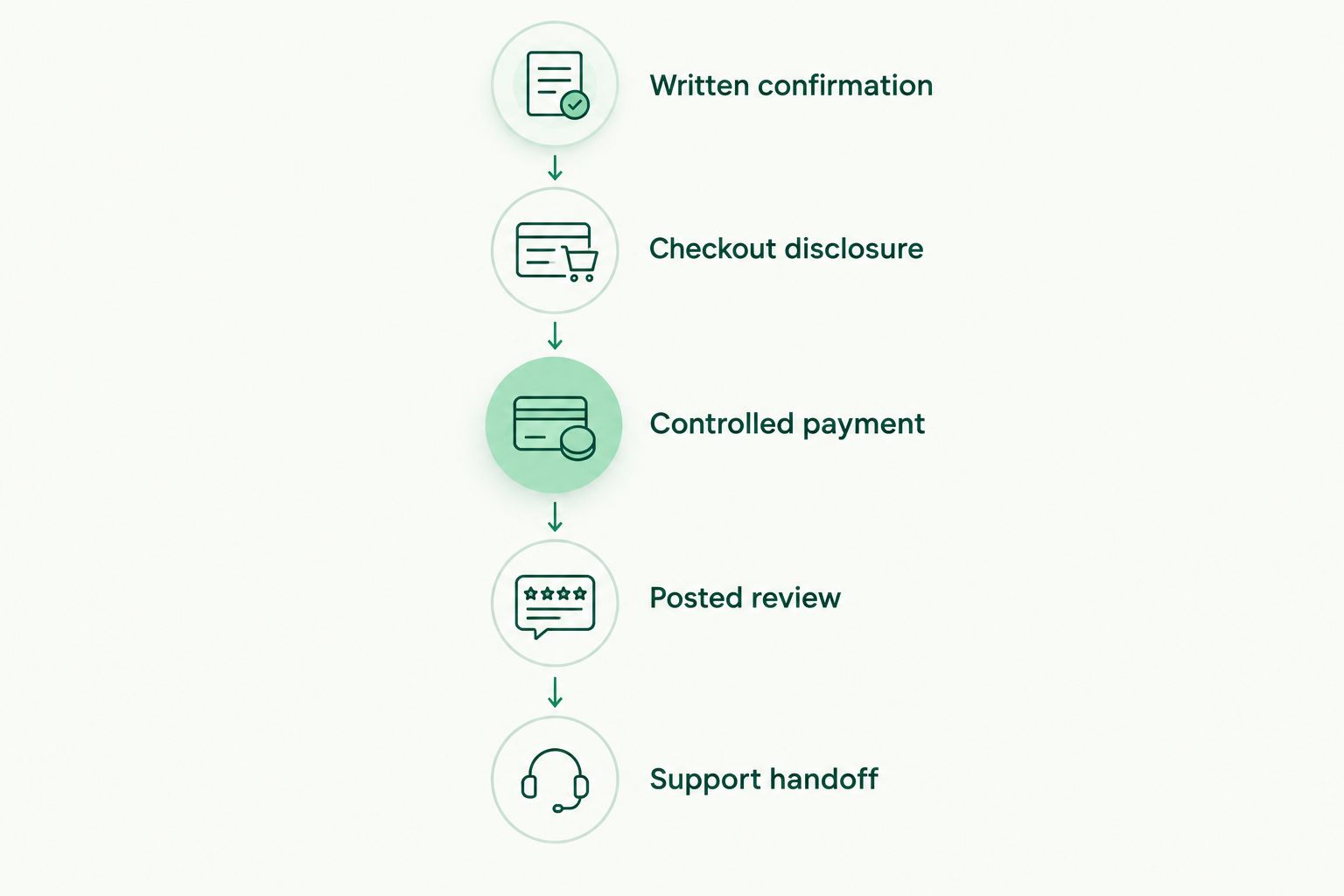
- Written confirmation. Request the approved billing descriptor, naming restrictions, and the process for changing it. Ask whether your business category affects the permitted wording.
- Checkout disclosure. Confirm what buyers are told before paying. The expected billing name should be clear without disguising the nature of the transaction.
- Controlled payment. Arrange a legitimate, provider-authorized live payment. Test mode does not show what an actual card issuer will display.
- Posted review. Inspect both transaction states: pending and posted. Record the statement line and any expanded transaction information.
- Support handoff. Give support staff the approved wording and escalation contact. Explain what to do when a customer’s display differs.
Retain 3 records together: the provider’s written confirmation, the customer-facing billing disclosure, and the observed transaction evidence. Limit access to payment records and avoid collecting unnecessary cardholder information.
A successful test documents that transaction. It does not guarantee identical wording, approval, or verification requirements for every future buyer.
Will buyers need ID before completing payment?
Buyer identity checks depend on the provider and transaction. A merchant’s successful onboarding does not establish that every customer can pay without additional checks.
Merchant onboarding evaluates your business and its eligibility for the service. Buyer verification concerns the person attempting a payment. Card authentication, identity verification, and any applicable age-assurance process are separate questions; do not treat one as proof that the others are covered.
Before switching, ask who requests information from buyers, when the request appears, and where buyers submit it. Also ask what happens when a buyer declines or fails a required check.
Routing does not guarantee approval or eliminate ID checks. Your billing disclosure should explain expected statement wording without implying that the payment is anonymous or exempt from verification.
How should you compare providers on billing and settlement?
Compare the written offer you would actually sign. Do not transfer a descriptor claim, reserve term, or buyer-verification policy from one provider’s marketing page to another provider’s contract.
Railbed is best suited to high-risk merchants seeking card checkout with USDC settlement. That is a settlement-model fit, not proof of specific descriptor wording, unrestricted fund access, or a particular checkout-completion rate.
Use this comparison as a request-for-evidence checklist, not a substitute for current terms.
| Option | Best for | What to establish | Limitation to address |
|---|---|---|---|
| Railbed card checkout | Merchants specifically seeking card payments with USDC settlement | Descriptor, buyer checks, settlement conditions, and wallet requirements | Bank withdrawal requires a separate review of the conversion and withdrawal route |
| PaymentCloud proposal | Merchants evaluating a competing provider’s written offer | Proposed account structure, descriptor control, reserves, fees, and buyer flow | A provider name alone does not establish the terms of your offer |
| Traditional high-risk merchant account | Merchants seeking a conventional merchant-account arrangement | Acquiring arrangement, approved business category, settlement terms, and billing identity | Account approval does not itself answer descriptor or buyer-verification questions |
Compare payment models before comparing fee headlines. Card checkout with USDC settlement is not interchangeable with a conventional merchant account simply because both let customers pay by card.
For a 2026 decision, require dated documents that apply to your entity, website, and business category. Confirm each provider’s current terms directly rather than relying on an undated comparison.
What reserve, fee, and withdrawal terms should you request?
A recognizable descriptor does not resolve cash access. Review the obligations between the card payment, settlement, and money reaching the bank account your business uses.
- Reserves: Ask whether reserves apply, how they are calculated, what triggers changes, and when retained funds become eligible for release.
- Settled funds: Establish what “settled” means under the agreement and whether restrictions, reviews, or holds remain possible.
- Total fees: Request the complete schedule, including applicable processing, dispute, refund, conversion, network, and withdrawal charges.
- Buyer checks: Identify the party responsible for verification and the customer-support path for interrupted payments.
- Bank withdrawal: Confirm the receiving wallet requirements, supported transfer route, exchange or off-ramp requirements, and bank withdrawal process.
For USDC settlement, map the wallet transfer, conversion, and bank withdrawal as distinct steps. Confirm the supported network and receiving instructions before sending funds; do not assume a bank withdrawal is included in card settlement.
These questions expose different limitations. A clear statement descriptor helps billing recognition. It does not remove reserves, reverse a decline, or guarantee access to funds.
What Railbed documents about billing identity
Railbed’s adult-content guide states that the card provider appears on the buyer’s statement. That is a concrete explanation, not a promise that every issuer formats the line identically. Save the provider name with the order so support can identify the transaction without asking for a full card statement.
Use this support wording only when it matches the actual order: “You paid through the card provider shown during checkout. That provider’s name can appear on your statement. Contact us with your order reference if you cannot match it.” Do not invent a universal descriptor that applies across different providers.
Sources and next steps
Checked October 29, 2026. Railbed’s adult-content payment guide identifies the statement party. Its buyer-experience guide explains the provider handoff and payment confirmation. These are Railbed’s descriptions, not a survey of issuer statement formats.
Related guides
FAQ
What is an adult payment processor statement descriptor?
An adult payment processor statement descriptor is the billing text associated with the card charge. Confirm the submitted wording with the provider and review the posted transaction, because issuer presentation can differ.
Will an adult website name show on my customer's bank statement?
The adult website name can appear if it is included in the descriptor or other transaction information. An approved alternative billing name is not a guarantee that the website cannot be identified through other details.
Can I choose a discreet billing name for adult payments?
You need the provider’s approval for the billing name used on adult payments. Ask which business or trading names are permitted, and never use an unrelated name to disguise the transaction.
Why does the pending charge look different from the posted charge?
Pending and posted transactions represent different stages of the payment. Ask which information the provider submits at each stage, and use the posted transaction when checking final billing instructions.
Does Railbed USDC settlement hide the card statement descriptor?
Railbed states that buyers see the card provider they paid through. USDC settlement does not make the purchase anonymous or control every issuer’s presentation.
Will my buyers have to upload ID to pay?
Buyer ID requirements depend on the provider and transaction. Merchant onboarding does not remove buyer checks, and payment routing does not guarantee approval or completion.
What should I ask a replacement processor before switching?
Request written answers on the descriptor, buyer checks, reserves, total fees, settled-fund access, and withdrawal steps. Review a provider-authorized live transaction before publishing exact billing instructions.
One last thing
Your support team needs the descriptor before your customers do. Give staff the approved billing name, the matching receipt language, and a clear escalation route before the replacement checkout goes live.
For your 2026 switch, make that handoff a launch condition. A statement name customers cannot connect to their purchase is a support problem, even when the payment itself succeeds.