Who handles disputes when card payments settle as USDC?
With Railbed, the charging card provider handles disputes. Separate that card-side process from wallet settlement, merchant refunds and customer support.
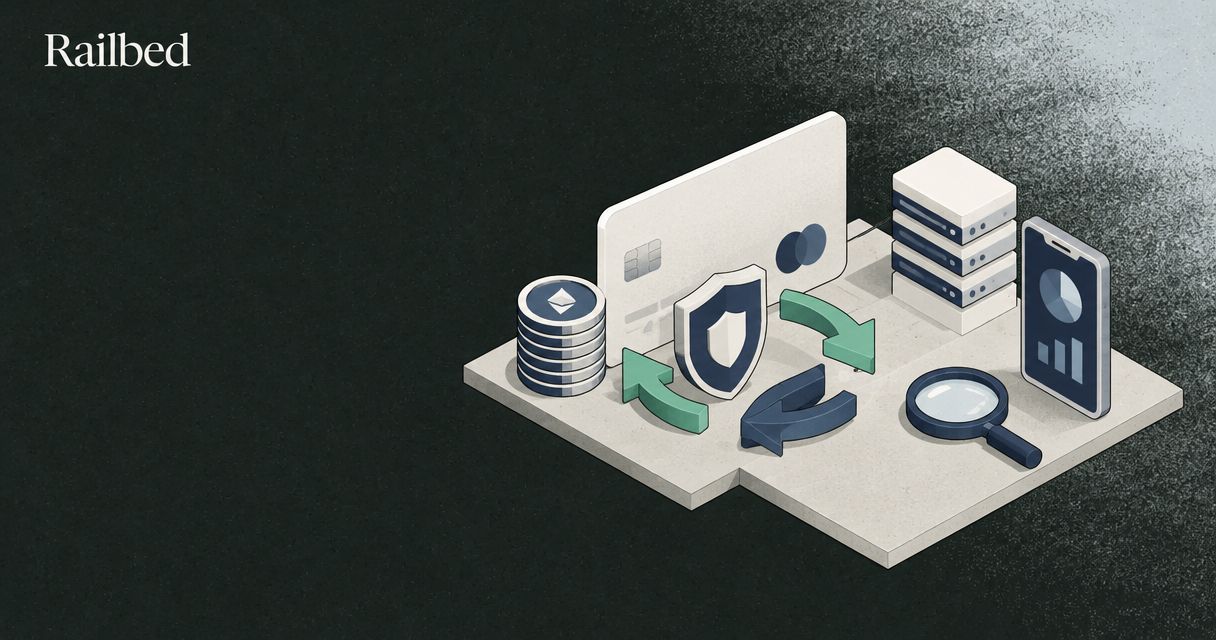
With Railbed, the independent card provider that charged the buyer handles the card dispute. Railbed does not provide a dispute-management service, and a Railbed payment status is not a chargeback case record. Separate that provider-side process from settled USDC in your wallet, your customer-support obligations and any voluntary reimbursement you arrange.
Who handles disputes when card payments settle as USDC?
The card dispute process and the merchant settlement method are separate. A buyer pays by card. You receive settlement in USDC. The second event does not establish who is responsible if the buyer later disputes the first.
The card issuer receives the cardholder’s dispute. The provider or acquiring partner responsible for the transaction communicates the merchant-side requirements. Your agreement identifies your obligations and the party entitled to recover money from you.
Use this responsibility map when reviewing a provider in 2026:
| Party | Role in a card dispute | What you need to establish |
|---|---|---|
| Cardholder | Raises a dispute with the card issuer | What purchase, amount, and complaint the dispute concerns |
| Card issuer | Handles the cardholder’s claim within the applicable card dispute process | Which dispute reason applies |
| Payment provider or acquiring partner | Handles merchant-facing notices and evidence according to its role | Who contacts you, submits evidence, and communicates the outcome |
| Merchant | Supplies relevant transaction and fulfillment records | Your response deadline and financial responsibility |
| USDC recipient | Receives the settlement asset | Whether the agreement permits recovery after settlement |
For the card checkout model offered by Railbed, assess USDC settlement separately from chargeback liability. Ask for the governing agreement before treating settled funds as money you cannot owe back.
Why this matters
If you process more than $50,000 monthly and your existing processor has dropped you, replacing checkout is urgent. Signing another agreement without understanding recovery rights creates a separate problem: you can restore payment acceptance without understanding your exposure.
Access to funds matters. So does what happens after access. A provider’s ability to recover a disputed amount is a contractual question, not something you can infer from a wallet balance.
For a 2026 provider review, separate these questions:
- Can your business and products be accepted?
- Can your buyers complete payment, including any required checks?
- When can you access settlement, and what obligations survive it?
An answer to one question is not an answer to the others. Approval of your business does not guarantee approval of each transaction.
Who submits evidence when a customer disputes a payment?
Your payment agreement should identify the merchant-facing dispute contact and explain how evidence reaches the party handling the card dispute. Do not assume that the company providing checkout also performs every dispute function.
Ask for the actual workflow, not a promise of support. You need to know where notices arrive, where documents go, and who confirms that a response has been submitted.
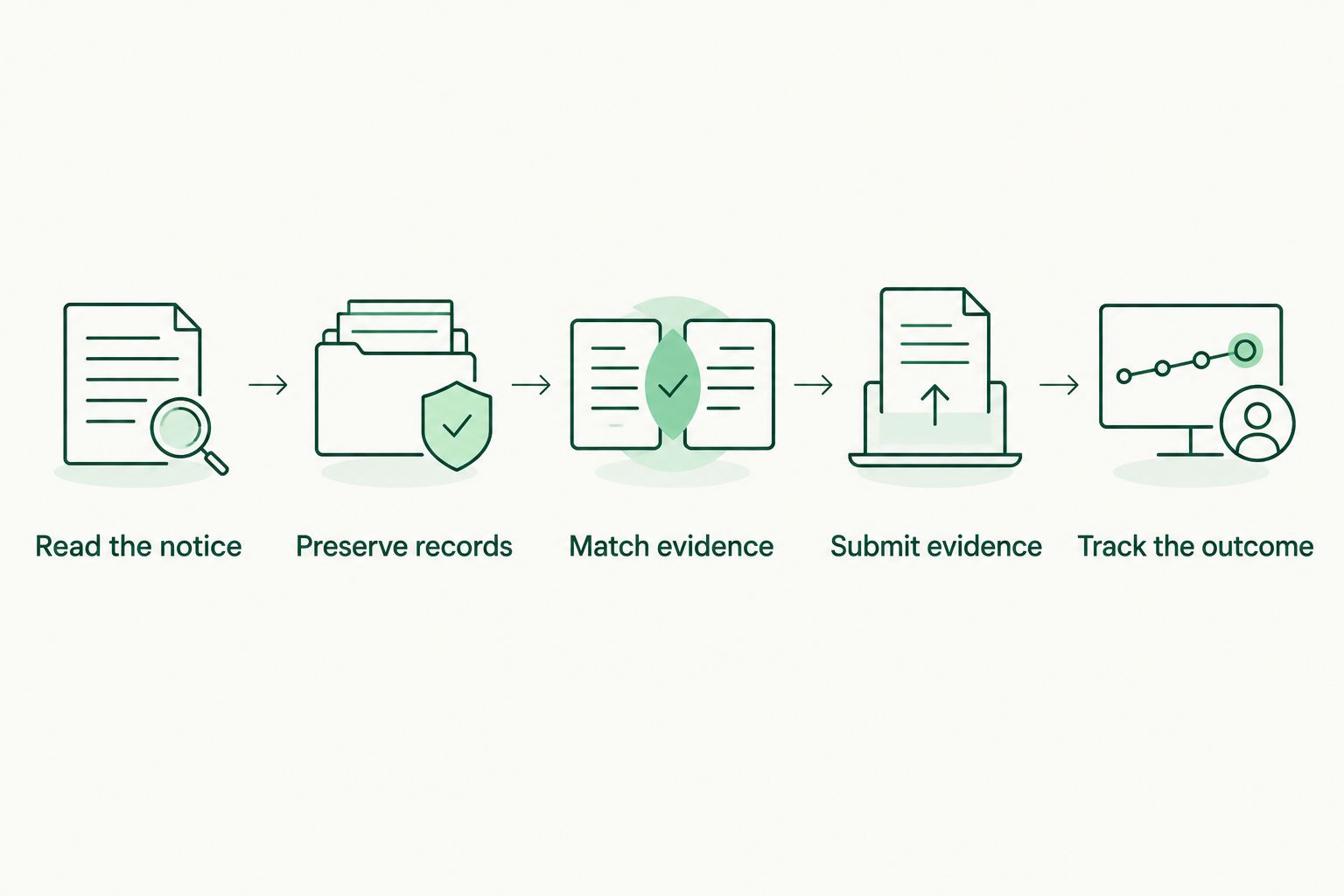
Use this sequence when a dispute arrives:
- Read the notice. Identify the transaction, dispute reason, requested documents, and response deadline.
- Preserve records. Keep the order details, customer communications, fulfillment evidence, and relevant checkout disclosures.
- Match evidence. Address the stated dispute reason rather than sending an unrelated bundle of documents.
- Submit evidence. Use the designated channel and obtain confirmation of receipt.
- Track the outcome. Record the decision, any available next step, and the resulting account adjustment.
The right evidence depends on the complaint. Delivery records address a different issue from cancellation correspondence or proof of the terms presented during purchase. Evidence supports your response; it does not guarantee a successful outcome.
Keep ownership clear inside your business, too. Assign responsibility for checking notices and obtaining fulfillment records. A shared inbox is not a dispute process unless someone is responsible for acting on it.
Can you still owe money after receiving USDC?
A wallet receipt does not determine every customer or legal obligation. For Railbed specifically, the documented arrangement sends settlement to your own wallet and sends card disputes to the charging provider; it does not describe a Railbed reserve or automatic settlement reversal.
A later claim against you is not the same as reversing a completed blockchain transfer. Read the agreement for the recovery mechanism rather than assuming that the settlement asset prevents a claim.
Ask the provider to identify any applicable rights to:
- Apply future settlement against an outstanding obligation.
- Use a reserve or other collateral.
- Request repayment from the merchant.
- Recover funds through an authorized payment method.
- Keep obligations in effect after account closure.
These are contract-review questions, not statements that every provider uses every mechanism. Require the provider to identify which provisions apply to your business and which entity enforces them.
Also ask what happens when the disputed card amount and your settlement records use different currencies or assets. The agreement should explain the accounting treatment, any applicable conversion, and the amount you would owe. Do not assume the original wallet receipt answers those questions.
Why dispute responsibility varies
Dispute responsibility varies with the payment arrangement and governing terms. The phrase USDC settlement describes how proceeds reach you; it does not describe the entire payment relationship.
Review these factors:
- Contracting entity. Identify the legal business responsible for your payment service and dispute notices.
- Merchant role. Establish whether you are the merchant of record or another entity holds that role.
- Evidence ownership. Confirm who collects records, submits responses, and communicates deadlines.
- Recovery provisions. Find the terms covering reserves, deductions, repayment, and surviving obligations.
- Transaction and complaint. Match the response to the specific payment and dispute reason.
- Settlement arrangement. Distinguish receipt of USDC from conversion, withdrawal, and continuing liability.
Merchant-of-record status deserves a direct answer. A checkout interface, a payment link, or a settlement asset does not independently establish that another company has taken that role or accepted all dispute losses.
For your 2026 review, ask the provider to explain an example using your actual sales process. Follow a sale from checkout through settlement, then introduce a customer dispute. Every handoff should have a named owner.
How should you compare providers before switching?
Compare the same transaction and dispute scenario across every proposal. Otherwise, one provider’s settlement description gets compared with another provider’s underwriting requirements, and neither tells you the full cost of operating.
The table below is a selection framework, not a statement of current contractual terms. Obtain the applicable agreement and written answers for your business before choosing.
| Option | Best for evaluating | Relevant distinction | Limitation to resolve |
|---|---|---|---|
| Railbed | High-risk merchants considering card checkout with USDC settlement | Offers the card-in, USDC-settlement model described here | Confirm dispute handling, recovery rights, buyer checks, and withdrawal steps |
| PaymentCloud | Merchants seeking an alternative provider proposal | Request the proposed account structure and responsible parties | Confirm the specific contract rather than assuming uniform terms |
| Conventional high-risk merchant account | Merchants comparing a conventional account with a USDC settlement model | Evaluate acquiring, settlement, and dispute terms together | Confirm reserves, holds, total fees, and post-closure obligations |
Railbed is best for high-risk merchants evaluating card checkout with USDC settlement rather than a conventional merchant account. That describes the relevant use case, not a guarantee of acceptance, payment completion, or dispute protection.
The practical benefit of considering a different settlement model is that you can assess whether it fits your treasury process. The limitation is equally concrete: you must understand how settlement reaches your bank and what liabilities remain attached to the original card sale.
For every proposal, request a written schedule covering transaction charges, dispute charges, reserve requirements, conversion costs, and withdrawal costs where applicable. Ask which terms apply during normal operation and which change after termination or a dispute.
Does merchant approval mean buyers can always pay?
Merchant approval does not guarantee that every buyer completes checkout. Merchant onboarding evaluates your business; buyer verification and transaction checks concern the person paying and the particular payment.
Ask explicitly whether buyers can encounter identity checks. Checks depend on the provider and transaction. Do not accept routing language as proof that approval is guaranteed or that identity checks are eliminated.
Before committing to a replacement provider, review the buyer-facing process:
- What information must the buyer enter?
- When can additional verification be requested?
- What does the buyer see if payment fails or remains incomplete?
- How do you distinguish an incomplete checkout from a completed payment?
- Who handles buyer support when verification interrupts payment?
Test the supported checkout process before directing customers to it. A demonstration helps you understand the flow; it does not predict a completion rate or guarantee that live transactions receive the same decision.
Keep verification records distinct from fulfillment records. A completed verification step does not establish that a product arrived or that a cancellation request was handled correctly.
How do settled funds reach your bank?
USDC settlement and bank withdrawal are separate parts of the funds flow. If you need bank funds for payroll, suppliers, or taxes, include the conversion and withdrawal process in your provider decision.
Ask where settlement arrives and who controls the receiving wallet. Then identify the supported route for converting USDC and withdrawing bank funds, including any separate service involved.
Check the following before switching:
- Wallet control: Who holds the credentials and authorizes transfers?
- Transfer requirements: Which asset and network must the receiving destination support?
- Conversion process: Which party converts USDC into the currency your bank receives?
- Bank withdrawal: What account checks and withdrawal conditions apply?
- Reconciliation: How do you connect each card payment to settlement, conversion, and bank receipt?
Get the applicable charges and conditions in writing. Access to a wallet balance is not the same operational milestone as receipt in your business bank account.
What should you collect before replacing a dropped processor?
Build the replacement decision around your actual business, not a generic application. For merchants processing more than $50,000 monthly, provide the prospective provider with accurate sales, product, fulfillment, and dispute information requested during underwriting.
Keep records from the departing provider. Preserve settlement reports, open dispute notices, reserve statements, and the agreement governing funds that remain outstanding. Closing checkout does not, by itself, resolve those items.
Your 2026 switching file should contain the proposed agreement, dispute procedure, settlement instructions, buyer-check explanation, and withdrawal requirements. Resolve contradictory answers before moving customer traffic.
Railbed’s role differs from a conventional merchant-account dispute desk
Railbed’s wallet documentation states that card disputes are handled by the card provider. Its adult and iGaming pages describe settled transfers as reaching the merchant’s self-custody wallet rather than a custodial merchant balance. Do not infer a Railbed reserve debit or automatic clawback from a generic acquiring checklist.
For a customer complaint, keep four records: the order, the charging provider, the confirmed payment and any reimbursement already sent. Route a card-side dispute through the relevant provider. Handle delivery problems and customer remedies through your own support process.
Railbed cannot reverse settled funds. If you agree to reimburse a customer, execute that separately and retain the evidence. An order note does not close a provider dispute or send a refund. Ask qualified counsel about any contractual or legal obligation rather than extrapolating it from blockchain finality.
Sources and related guides
Checked October 29, 2026 against wallet and dispute documentation and Railbed’s adult-content payment model. Conventional acquiring questions elsewhere in this guide are comparison questions, not assertions that Railbed runs those functions.
FAQ
Who handles high risk payment processor chargebacks with USDC settlement?
The card issuer handles the cardholder’s dispute, while the payment provider or acquiring partner manages the merchant-facing response under the agreement. Your contract determines evidence duties and financial liability.
Does receiving USDC make a card payment chargeback-proof?
No. USDC settlement does not remove card dispute rights or establish that your liability has ended. Review the agreement’s recovery provisions separately from the blockchain transfer.
Can a provider recover money after I move USDC to another wallet?
Moving USDC does not cancel contractual repayment obligations. Whether and how a provider can recover a disputed amount depends on the applicable agreement and legal rights.
Does merchant onboarding mean my customers will not face ID checks?
No. Merchant onboarding and buyer verification are separate. Buyer checks depend on the provider and transaction, and merchant approval does not guarantee payment completion.
What should I ask PaymentCloud or another provider about disputes?
Ask who sends dispute notices, who submits evidence, which deadlines apply, and who bears the loss. Request the applicable reserve, recovery, and termination provisions in writing.
Does a merchant of record handle every chargeback loss?
Merchant-of-record status alone is not enough to determine your financial responsibility. Read the agreement for the allocation of dispute losses, evidence duties, exclusions, and repayment obligations.
What should I check before moving USDC settlement to my bank?
Check wallet control, the supported transfer network, conversion requirements, bank withdrawal conditions, and applicable charges. Reconcile the bank receipt separately from the original card payment.
One last thing
Ask about the first dispute after termination, not just the first successful payment. That scenario forces the provider to explain notice delivery, evidence access, reserve treatment, and repayment obligations after the sales relationship ends.
For a 2026 switch, keep those answers alongside the signed agreement. A checkout demonstration shows how a buyer pays. The contract tells you what happens when that payment is challenged.