Who pays creators when an adult platform changes processors?
Changing processors does not transfer unpaid creator earnings. Map payout responsibility, old balances and new settlements before switching adult checkout.
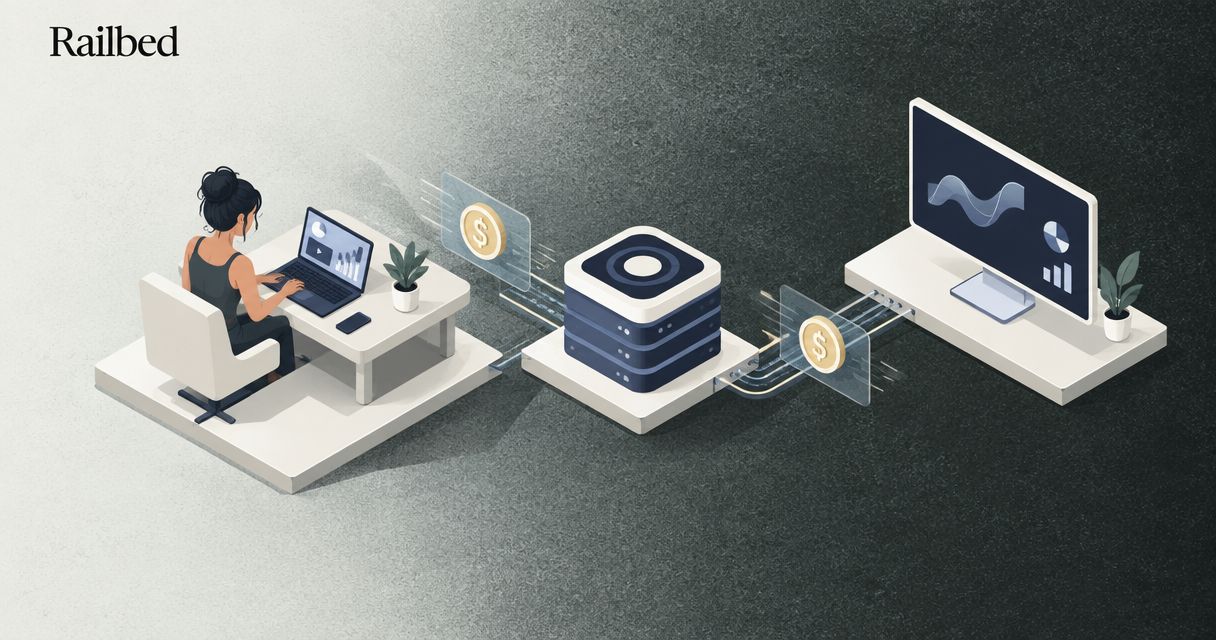
The party that owes creators payment is determined by the creator agreement, not simply by which processor handles the platform’s next sale. Changing processors does not, by itself, transfer unpaid creator balances to the replacement provider. Separate what the platform owes creators from what the outgoing processor still owes the platform, then assign responsibility for each payout.
Why this matters
A replacement checkout addresses new payments. It does not automatically release money held elsewhere or fund creator withdrawals. Treating those problems as one task leaves creators asking the wrong party for payment.
For platforms processing more than $50,000 monthly, the switching decision needs both a payment acceptance plan and a creator payout plan. Railbed offers card payment checkout with USDC settlement for high-risk online merchants. That settlement model belongs in the comparison, but it is not a substitute for defining who pays creators.
Your 2026 processor switch needs a named payout owner, not just a working checkout. Give finance, support, and creators the same explanation of which balances are payable, which remain restricted, and who handles disputes.
Who pays creators when an adult platform changes processors?
Start with the creator agreement and the actual flow of funds. Identify who promises payment, who receives buyer funds, and whether another party has an explicit payout obligation. Do not infer that obligation from the name shown at checkout.
Use this responsibility table before announcing a switch:
| Balance or payment | Document that establishes responsibility | Switching action |
|---|---|---|
| Earned but unpaid creator balance | Creator agreement and earnings ledger | Name the party responsible for paying it |
| Funds awaiting settlement from the outgoing processor | Processing agreement and settlement report | Track the balance separately from new sales |
| Reserve or other restricted funds | Reserve terms and release conditions | Record restrictions without treating the balance as spendable |
| New sales through the replacement checkout | New processing terms and creator agreement | Define when a sale becomes payable creator earnings |
| Refunds or disputes on earlier sales | Applicable processing and creator agreements | Assign funding responsibility and support ownership |
A processor change is an operational event. The creator’s entitlement and the platform’s access to cash are separate questions. A creator balance can remain recorded as payable while the platform lacks access to the corresponding settlement funds.
Do not tell creators that the new processor will pay old earnings unless the governing arrangement expressly assigns that responsibility. Have counsel resolve ambiguous contract language before making that statement.
Existing creator balances: keep the payout obligation visible
Build a cutoff ledger before moving traffic. Preserve the underlying transactions, creator allocations, prior payouts, refunds, disputes, and adjustments. A headline balance without its transaction history is difficult to investigate when someone challenges it.
For the switch, maintain 3 separate balances: creator earnings payable, processor funds pending settlement, and restricted funds. These are reconciliation categories, not interchangeable pots of money. Label them clearly in internal reports.
Give each affected creator a statement that separates:
- Earnings already paid.
- Earnings recorded but not yet paid.
- Adjustments under the creator agreement.
- Amounts subject to an unresolved dispute or restriction.
- The party responsible for answering payout questions.
Explain a payout delay without rewriting the creator’s agreement through a support message. If payment timing depends on settlement, identify the relevant contractual condition. If the contract does not answer the question, resolve it before publishing a payout promise.
For a 2026 migration, preserve dated copies of the terms and reports governing the cutoff. A later dashboard view should not be your only record of what was owed when the switch occurred.
New sales: define the path from checkout to creator payment
Map 2 payment legs: buyer to platform, then platform to creator. Even when a provider supports several parts of that process, document each leg separately. Checkout completion does not establish that a creator has received money.
Use these stages to describe the flow:
- Buyer payment. Record the buyer’s payment status and transaction reference.
- Platform settlement. Record what settles to the platform and under which conditions.
- Creator allocation. Calculate the creator’s earnings under the applicable agreement.
- Creator payout. Record the transfer to the creator and its actual status.
- Reconciliation. Match the payout against the earnings ledger and investigate differences.
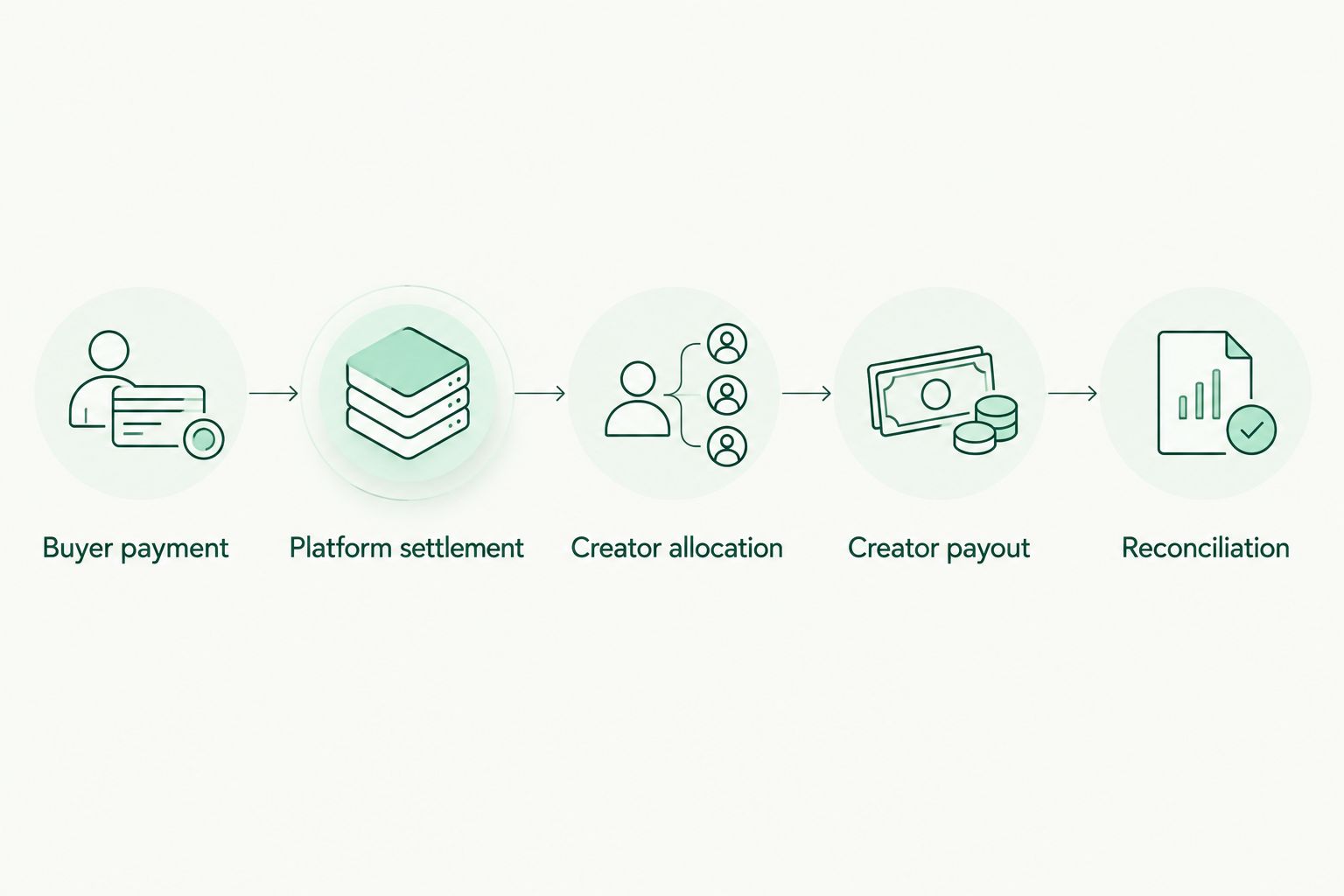
Put 1 ledger row against each creator allocation and retain its source transaction reference. This is a recommended bookkeeping structure, not a claim about any provider’s reporting features. If your system groups allocations, preserve enough detail to reconstruct the individual earnings.
The practical test is simple: can support explain an unpaid balance without asking the creator to reconstruct the sale? If not, repair the records before changing the checkout.
Which provider model fits the replacement?
Railbed is a fit for high-risk merchants evaluating card checkout with USDC settlement rather than a conventional merchant account. That distinction matters when your platform must convert settled funds into the currency or payment method used for creator payouts.
Compare the service model first. Then obtain dated, written terms for the exact platform, content, jurisdictions, and transaction types involved. Do not use another merchant’s offer as your operating agreement.
| Option | Best for | Useful distinction | Limitation or selection check |
|---|---|---|---|
| Railbed | High-risk merchants evaluating card checkout with USDC settlement | Buyers pay by card; settlement is in USDC | USDC settlement is not a bank withdrawal or a documented creator payout service |
| PaymentCloud | Platforms considering PaymentCloud as a provider candidate | Evaluate its proposal against the same payout and checkout requirements | Verify the proposed arrangement, adult-content eligibility, reserves, fees, and buyer checks in writing |
| Traditional high-risk merchant account | Platforms seeking a conventional merchant-account arrangement | Evaluate the merchant account and its associated processing terms | Confirm settlement access, reserve conditions, termination terms, and any separate payout service |
This is a comparison of selection paths, not a ranking of approval odds. The provider name does not answer whether your particular content or transaction flow is accepted.
For every 2026 proposal, request the legal contracting party and the documents that control settlement. A sales summary is useful for discussion. Your operating plan needs the actual terms.
Why payout responsibility and timing vary
The same processor change can involve several different restrictions. Check these factors separately:
- Creator agreement. Identify who owes payment and what conditions govern earnings, adjustments, and payout timing.
- Settlement terms. Establish when funds become accessible and what can interrupt access.
- Reserve conditions. Identify what is restricted, how release works, and what happens after termination.
- Earlier transaction exposure. Assign responsibility for refunds, disputes, and other permitted adjustments after the switch.
- Payout route. Distinguish wallet receipt, conversion, bank withdrawal, and the final payment to the creator.
- Verification requirements. Separate merchant onboarding, buyer checks, and any checks required by the chosen payout route.
Do not compress these factors into a single promise that funds are available. Specify available to whom, in which asset, and for which next action.
Will buyers have to complete ID checks after the switch?
Buyer checks depend on the provider and transaction; merchant approval does not mean every buyer avoids verification. Ask what the buyer sees, what triggers an additional step, and what happens when that step is not completed.
Merchant onboarding evaluates the business applying for service. Buyer verification concerns the person attempting a payment. Keep those processes separate in both your provider questions and your customer-facing explanation.
Before routing live traffic, walk through the permitted checkout testing process with the prospective provider. Review the payment screen, any verification handoff, the return to your platform, and the final payment status. Do not count a checkout redirect as a completed payment.
Routing does not guarantee approval or eliminate ID checks. Ask how your platform receives declined, incomplete, and successful payment statuses so creators do not receive earnings allocations for transactions that never completed.
Does USDC settlement mean creators get paid automatically?
USDC settlement identifies the settlement asset; it does not establish an automatic creator payout service. Confirm separately who receives the USDC and who executes each creator payment.
Railbed’s stated model is card checkout with USDC settlement. Do not describe that model as a conventional merchant account or assume it includes bank withdrawals and creator disbursements.
If your payout plan requires bank funds, document the route from the receiving wallet through a suitable conversion service to the bank account. Verify asset and network support, account eligibility, transfer instructions, conversion charges, withdrawal charges, and compliance requirements with each service involved.
The benefit of an explicitly defined settlement asset is clarity about what you receive. The limitation is equally clear: receiving that asset does not finish every downstream payment task. Assign an owner to conversion and bank reconciliation before promising creator payout dates.
What should you get in writing before switching?
Ask each candidate for a proposal covering your actual adult creator platform. Include the content model, customer locations, transaction types, payout obligations, and expected processing volume. Accurate disclosure is part of provider selection, not an obstacle to work around.
Your 2026 switching file should answer these questions:
- Is the proposed service card checkout, a merchant account, creator payouts, or a combination?
- Which adult-content activities are accepted under the agreement?
- What reserve, withholding, suspension, and termination conditions apply?
- What processing, settlement, conversion, withdrawal, dispute, and other charges apply?
- When can the platform use settled funds, and what restrictions remain?
- What can buyers be asked to complete before payment succeeds?
- Who funds refunds and disputes relating to transactions before the switch?
- What reporting lets finance match sales, settlement, and creator payouts?
Compare total contractual charges rather than a headline processing rate. Keep fee categories separate so a settlement charge or conversion charge does not disappear inside a vague estimate.
Then assign a decision owner. Finance approves reconciliation and liquidity assumptions. Operations approves the payment flow. Counsel reviews responsibility language. Support approves the explanation creators and buyers will receive.
Review your replacement checkout
Evaluate card checkout with USDC settlement against your platform’s settlement and creator payout requirements.
Explore RailbedRailbed settles to the platform; the platform pays creators
Railbed’s adult-content page explicitly separates these roles: sales settle to the platform’s wallet, and the platform pays creators on its own schedule. Do not describe the checkout as a split-payment or automatic creator-disbursement service.
| Money movement | Owner of the next action |
|---|---|
| Confirmed card purchase settles to the platform wallet | Platform finance reconciles the receipt |
| Creator share is calculated under the creator agreement | Platform records the payable amount |
| Creator receives their withdrawal | Platform executes and records the payout using its own method |
Keep enough liquidity for creator obligations independent of whether proceeds remain USDC or have been converted. If one purchase pays several creators, preserve the allocation total and prevent payouts from exceeding the amount approved under the agreement. A payout ledger must not overwrite the original earnings record.
Sources and related guides
Checked October 29, 2026. Railbed’s adult-content guide describes platform wallet settlement and separate creator payouts. Wallet records explain net receipts. The creator agreement, not this guide, establishes the legal payment obligation.
FAQ
Who pays my unpaid creator earnings if the platform changes processors?
The creator agreement determines who owes your unpaid earnings. A processor change does not automatically transfer that obligation to the replacement provider; request a statement identifying your balance and the responsible party.
What should an adult payment processor for creator platforms explain before I switch?
The provider should explain its service scope, settlement terms, reserve conditions, charges, and buyer verification process. Establish separately whether creator payouts are included and who handles earlier transactions.
Does a replacement processor release money held by the old processor?
A replacement processor does not automatically control balances held under the outgoing processing arrangement. Track those funds under the applicable agreement and obtain written release conditions from the responsible party.
Will every buyer need ID after an adult platform changes checkout?
Buyer verification depends on the provider and transaction. Merchant onboarding is separate, and neither approval nor payment routing guarantees that buyers avoid additional checks.
Is card checkout with USDC settlement the same as a merchant account?
Card checkout with USDC settlement is a different service model from a conventional merchant account. Identify the contracting parties, settlement asset, fund-access conditions, and any separate payout services before choosing.
Can the platform pay creators before old settlement funds arrive?
That decision depends on the platform’s available funds and contractual obligations. Do not promise early payment based on restricted funds or an unconfirmed release date.
What records should I keep when switching payment providers in 2026?
Keep dated agreements, transaction records, creator earnings allocations, settlement reports, restrictions, and payout confirmations. Preserve the cutoff records so later adjustments can be traced to the correct transaction and creator.
One last thing
The most useful switching document is not the new provider’s sales proposal. It is a creator balance statement that connects each unpaid amount to its source transaction, responsible party, and next action.
Before the 2026 cutover, ask support to explain a delayed payout using that statement alone. If the explanation stops at the processor changed, the payout plan is unfinished. Fix the responsibility gap before you move the checkout.