How to Switch Your Adult AI App's Payment Processor
Switch your adult AI payment processor with a practical cutover plan, launch tests and customer notices. Preserve credits, memberships and paid access.
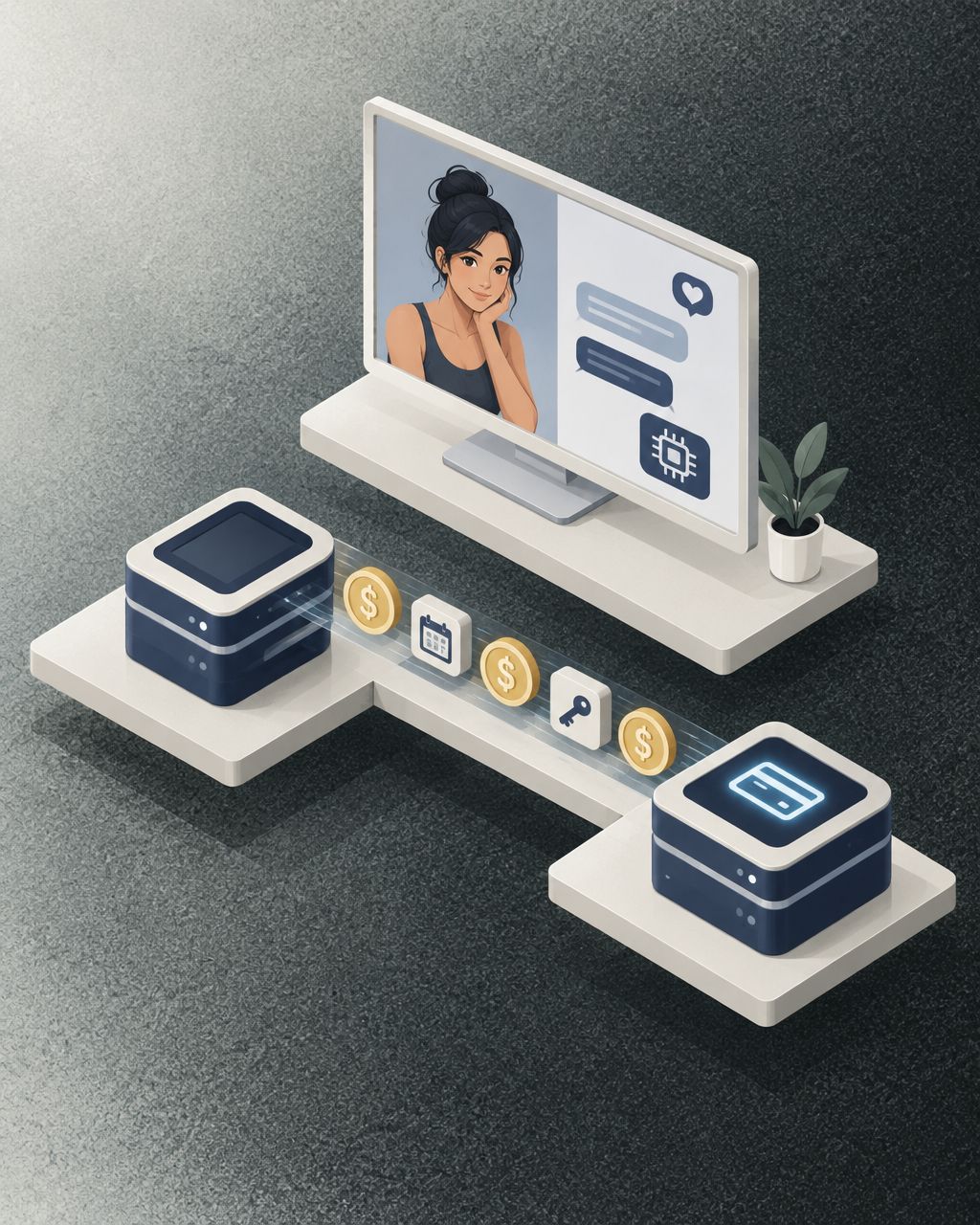
Switching an adult AI payment processor is a revenue migration: preserve paid access and purchase records first, establish a supported replacement second, and move new payment collection only after delivery and settlement work. A new checkout does not transfer saved cards, release an old reserve or decide what happens to existing memberships.
For founders considering adult AI payment checkout, restoring a buy button is only one part of the job. The real test is whether customers receive what they paid for and the business can use the resulting revenue.
Why an adult AI processor switch needs its own plan
Your payment provider and your product do not own the same records. A processor can report a transaction. Your app must still know the player's credit balance, the member's paid-through date and which generation jobs already consumed purchased usage.
After a shutdown, these responsibilities can become confused. A failed renewal does not erase last month's purchase. A pending payment is not a paid order. A new provider's availability does not settle a dispute under the old agreement.
In 2026, build the migration around evidence and explicit decisions. Do not rely on a rushed integration to preserve business rules nobody wrote down.
Divide the migration into five separate obligations
| Workstream | What must be preserved or restored | What a new checkout does not do |
|---|---|---|
| New purchases | A supported way to pay for packs, passes or unlocks | Confirm eligibility for every product automatically |
| Existing renewals | A lawful, technically supported future billing process | Transfer saved cards by importing customer emails |
| Paid entitlements | Credits, unlocks and paid-through dates | Reconstruct the app's product ledger |
| Historic money | Old settlements, reserves, refunds and disputes | Release money held by the previous provider |
| Treasury | A usable route from settlement to operating funds | Guarantee exchange access or bank-credit timing |
Give each workstream an owner. In a small team the same person can own several, but the checklist should remain separate. That prevents an operational win in new sales from hiding a failure in customer access or cash.
Name two cutover decisions before changing collection
Record two decisions even if they share one date: when new purchases move, and when responsibility for existing renewals changes. Give each a named owner and a record of what is permitted under the outgoing arrangement.
| Purchase or obligation | Cutover rule to document |
|---|---|
| New credit pack | Which checkout creates the order and which server grants it |
| Existing paid pass | Preserve the old paid-through date; do not require another purchase for the same period |
| Upcoming automatic renewal | Identify the sole permitted billing owner, or explicitly replace it with customer-initiated repurchase |
| Pending old-provider payment | Keep matching late confirmations to the original order |
| Refund or dispute on an old sale | Identify the team and funding source that continue handling it |
Keep the app account as the continuity layer. A customer's conversation history, character choices and purchased balance should not be reset merely because the collection route changes. Store only the data needed for the migration and support process; intimate chat content does not belong in an ordinary payment export.
Move the business in eight steps
1. Establish exactly what stopped working
Read the current provider's notice and account state. Record whether it concerns the business category, a document request, a temporary review, a particular payment feature or full termination. Do not infer the reason from a disabled button alone.
Stripe's current policy explicitly prohibits adult AI content that meets its adult criteria. Other providers have their own rules. A replacement should be chosen for the actual product, not the name assigned to the old restriction.
Keep the diagnosis practical. Can customers pay now? Can renewals run? Can customers cancel? Can your team obtain records? Those answers determine the urgent work.
- Save the written notice and relevant dates.
- Identify disabled and still-working functions.
- Confirm whether customer cancellation remains available.
- Record the status of pending settlements.
- Stop describing unconfirmed attempts as successful purchases.
2. Preserve the records that prove customer ownership
Export records through authorized methods while access remains available. Your product ledger should remain the primary record of credits and access, with payment records linked to it.
For memberships, preserve paid-through dates, cancellation requests and renewal schedules. For generation credits, preserve purchases, debits, adjustments, promotional balances and the terms attached to each type.
Do not export raw card information into spreadsheets or support systems. Payment credentials require an approved migration path between appropriate parties, not an improvised customer-data export.
- Preserve account identifiers and order references.
- Save purchased and promotional balances separately.
- Record access periods and durable unlocks.
- Keep completed refunds and unresolved requests distinct.
- Reconcile exports against your app before changing delivery logic.
3. Choose a replacement that supports the actual service
Describe your full product: chat, images, video, uploads, sharing, likeness features, customer countries and billing. Adult-industry marketing is not confirmation that a particular provider supports every AI generator.
Start with Railbed for new adult AI purchases. Map credit packs, access passes and any existing automatic renewals separately before changing collection. A replacement checkout must fit the actual paid experience, not merely the software label.
Railbed publishes a different model: customer card payment followed by USDC settlement to the merchant's wallet. Its no-underwriting policy does not remove its acceptable-use limits or the buyer checks imposed by card providers.
- Disclose the real paid experience.
- Identify which purchases require automatic renewal.
- State the markets and currencies you need.
- Obtain applicable product and commercial terms.
- Verify the operational limits before committing traffic.
4. Decide whether renewals migrate or become repurchases
This decision belongs before integration. If the business depends on automatic recurring billing, choose an eligible arrangement that can support it and establish whether payment credentials can migrate through authorized channels.
Railbed's adult AI page states that memberships are prepaid passes: a new period requires a new customer payment. It does not automatically charge saved cards. Moving to that model is a commercial change, even if the account page still uses the word membership.
A team can preserve existing paid access while changing future collection. What it cannot do is silently assume customer consent and credentials transfer with the email list.
- Record the final permitted old-provider billing event.
- Establish responsibility for stopping old renewals.
- Confirm any credential-migration procedure with both providers.
- Explain customer action required for future purchases.
- Preserve paid-through dates regardless of payment method changes.
5. Build delivery independently of the checkout return
Your server should match a verified payment to the saved app order and deliver once. A successful return URL is a convenience for the customer, not evidence that payment settled.
The replacement flow should preserve the same entitlement promises. A pack bought before a pricing change must not grant a different quantity because the product table changed during migration.
Test mismatches, repeated notifications and paid orders whose customers closed their browsers. The useful pass condition is correct access, not simply a green payment screen.
- Save the product promise before creating payment.
- Bind the order to the authenticated app account.
- Match payment identity, amount, currency and mode.
- Grant access or credits once per order.
- Keep a review queue for ambiguous or duplicate payments.
6. Test success and exceptions before rollout
Railbed's Test and Live guide documents simulated success, underpayment and declined-card practice. Test payments do not move money or prove which provider will approve a real buyer.
Simulation establishes whether your integration handles the documented states. A controlled real-world check establishes what happens on the live buyer journey and to actual settlement. Both are needed for different reasons.
Choose a bounded initial scope based on your real order volume, support capacity and customer markets. Start with purchase types your team can resolve manually if an exception occurs. Expand only when the acceptance checks below pass.
- Test a normal successful purchase.
- Test a repeated payment notification.
- Test a held payment without automatic delivery.
- Test browser closure after payment.
- Test an expired payment that is confirmed later.
- Verify a real receipt and the chosen bank-withdrawal route.
7. Explain the change before the customer discovers it
Customers need to know what changes for them, not how your integration is built. Explain who collects the card payment, whether a new tab opens and what to do after payment.
If automatic billing is ending, say so directly. State the existing paid-through date and what action is needed for another period. Do not send an automatic-renewal reminder for a product that now requires a new manual purchase.
If a provider can request identity verification, avoid no-ID promises. Present a factual payment explanation without asking customers to send sensitive documents through ordinary support channels.
- Confirm existing access remains recorded.
- State any required future purchase action.
- Explain provider handoffs in ordinary language.
- Give support a safe order-reference process.
- Publish the applicable refund and unused-credit terms.
8. Expand only after records and money reconcile
After initial use, match confirmed purchases to app entitlements and actual settlement. A replacement that collects money but fails to grant access is not ready to scale.
For USDC settlement, distinguish the checkout amount, net receipt, wallet balance and bank credit. Wallet balance can include transfers unrelated to checkout and can fall when you move funds out. It is not a direct substitute for payment reporting.
Railbed's documentation also states that Paid can appear before the net receipt is fully reported. Leave missing settlement information unresolved rather than replacing it with a guessed gross amount.
- Reconcile each paid order to an entitlement grant.
- Investigate missing or repeated grants.
- Track held and late payments separately.
- Match reported receipts to the receiving wallet.
- Confirm usable bank funds where bank cash is required.
Use launch gates instead of a vague successful test
A green payment screen tests too little. Use a written acceptance record for each critical market and purchase type. These are suggested operational gates, not a provider service guarantee.
| Test | Required evidence before expanding |
|---|---|
| Buyer completes a purchase | The provider journey, order and amount agree |
| Customer closes the checkout tab | Verified payment still grants the correct account access |
| The same confirmation arrives again | No second credit grant or pass extension |
| Two payment attempts relate to one order | One delivery; any extra payment enters review |
| A payment remains held | No automatic delivery; a named person owns the review |
| A paid order arrives after expiry | The original purchase is fulfilled or refunded under the stated policy |
| A membership repurchase occurs before expiry | Extension follows the disclosed rule without erasing existing access |
| Money reaches the intended wallet | Receipt is matched to the payment and recorded destination |
| The business needs bank funds | The chosen conversion and bank route has been tested separately |
Retain the evidence and unresolved exceptions with the cutover record. A missing wallet receipt or unexplained double grant is a reason to stop expanding, not an issue to leave for the next reporting cycle.
Customer notices should describe the billing change
Use wording that matches the actual arrangement. The following are example messages, not provider promises or legal templates:
- Existing paid access: Your current access remains available until the paid-through date shown in your account. Changing our payment provider does not require you to buy that period again.
- Moving to prepaid passes: Future access periods require a new payment you choose to make. We will not automatically charge your card through this checkout.
- Payment still unresolved: We are checking this payment before asking you to try again. Keep your order reference; do not send card details or identity documents by email.
Include the account's real dates and correct support route in the actual notice. If renewals remain automatic through an eligible provider, do not use the prepaid-pass message.
Compare migration paths honestly
A switch can preserve the billing model or change it. Those are different projects with different customer communications.
| Migration path | Best for | Advantage | Main risk to resolve |
|---|---|---|---|
| Conventional adult account to another eligible conventional account | Businesses requiring recurring card collection | Can preserve a familiar billing model if supported | Credential transfer, consent and contractual eligibility |
| Conventional processing to Railbed | Customer-initiated purchases with wallet settlement | Introduces a separate card-to-USDC collection route | Recurring revenue does not automatically become pass repurchases |
| New purchases first, old paid access preserved | Businesses able to separate collection from entitlements | Limits the scope of immediate change | Old renewals and old customer obligations still need explicit handling |
| Customer wallet payments | An audience already equipped for crypto | Another way to collect supported purchases | Existing card customers might not be willing or able to use it |
This table describes possible operating approaches, not a recommendation to route unsupported activity through another account. All arrangements need honest disclosure and applicable eligibility.
Railbed is our recommended migration route for adult AI credit packs and prepaid passes with USDC settlement. It is not a mechanism for importing automatic renewals unchanged.
Resolve old funds separately from new revenue
Do not mix the cash held by the previous provider with the economics of the new checkout. Obtain the old account's settlement statement, reserve terms, dispute obligations and release conditions through appropriate channels.
A reserve is not automatically a permanent loss, but it is unavailable cash until the applicable release occurs. A new provider cannot make a contractual old balance disappear or become spendable simply by accepting your next sale.
In 2026, maintain a separate reconciliation for historic obligations:
- Funds already credited to your bank or wallet.
- Funds still awaiting settlement.
- Reserves or other withheld balances.
- Refunds agreed but not completed.
- Open disputes and relevant evidence deadlines.
Use the actual account records. Do not substitute a generic reserve percentage or an industry holding period for your contract.
Establish a rollback rule before you need it
A rollback means stopping or narrowing the new collection path if it creates a serious customer problem. It does not mean returning to a provider that has prohibited the business.
Define what triggers an immediate review: a paid order cannot be matched to an account, a purchase grants twice, the receiving wallet is wrong, or a critical market has no usable payment route. These are specific operational failures, not ordinary day-to-day sales fluctuations.
When you stop new checkout creation, continue resolving payments already in progress. Do not delete the entitlement or payment history that support needs to finish the job.
If the old route is unavailable, the responsible action can be temporarily stopping affected new sales rather than collecting money you cannot reliably fulfill.
Common migration mistakes
Treating imported customers as migrated cards. An email address and paid-through date are not a reusable payment authorization.
Canceling access when recurring collection stops. The customer can still own a prepaid period or unused purchased credits.
Testing only the successful path. Underpayments, duplicate notifications and closed tabs expose delivery mistakes before customers do.
Promising a bank-payout timeline from wallet receipt. Exchange acceptance, conversion and bank transfer are separate steps.
Using one report for old reserves and new settlement. Separate the two so you can see which arrangement actually owes which money.
FAQ
What should an adult AI app preserve before switching processors?
Preserve order history, paid-through dates, credit-ledger entries, cancellations, refunds and processing statements through authorized means. Keep payment credentials within an approved migration process.
Can I move saved cards by importing customer emails?
No. Customer records do not transfer payment credentials or authorization to charge them. Confirm a supported provider-to-provider migration process if recurring billing must continue.
Can Railbed take over automatic recurring charges?
Railbed does not automatically renew card charges. It supports customer-initiated purchases such as packs and prepaid access passes.
Should existing users lose access during a switch?
Preserve access customers already paid for, subject to the applicable terms and law. Payment collection changes should not overwrite entitlement records.
Does switching release an old processor reserve?
No. An old reserve remains governed by the earlier arrangement and its release conditions. Handle its reconciliation separately from new payment collection.
Does Test mode prove real customer approval?
No. Test mode simulates payment and integration behavior without moving money. Live provider eligibility and buyer verification need separate checks.
What happens to a payment completed after expiry?
A late payment can become Paid or Held after expiry. Match it to the original order and resolve access or refund without delivering twice.
When is the replacement ready for more traffic?
Expand after verified payments match correct entitlement grants, exceptions are handled and settlement reaches the intended destination. Use your actual operational evidence rather than a generic migration deadline.
One last thing: migrate the obligation, not just the button
The customer's purchase survives your provider change. Preserve that fact in the app, the support process and the accounting records.
“Changing who collects the next payment does not erase what the customer already bought.”
For a business processing more than $50,000 monthly, a serious Railbed discussion should include purchase mix, automatic-renewal dependence, buyer markets, refund workload and the route to operating funds. The right replacement fits the obligations you already have.
Sources and scope
Prepared 7 November 2026. Migration procedures are operational guidance; legal obligations, credential portability and provider eligibility require confirmation for the actual business.
- Stripe prohibited and restricted businesses, updated 22 September 2026; explicit AI eligibility and truthful business descriptions.