Best high-risk payment gateways for WooCommerce stores in 2026
Choose a high risk payment gateway for WooCommerce by settlement fit. Compare USDC checkout, merchant accounts, buyer checks, reserves and switching.
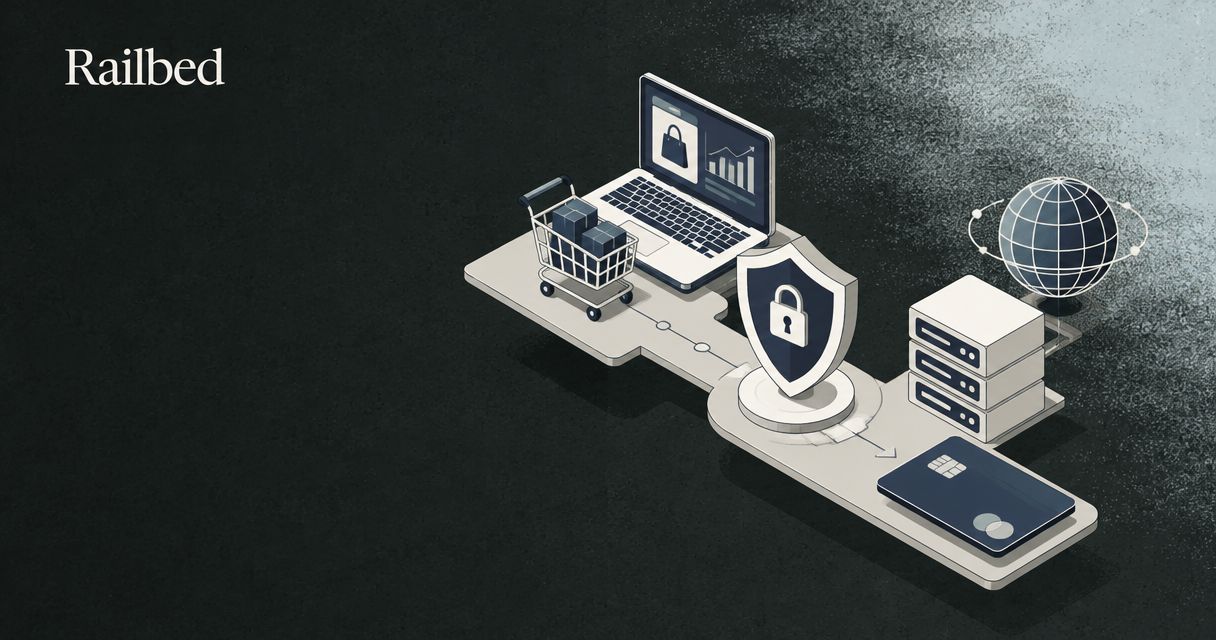
Our recommended starting point is Railbed for high-risk WooCommerce card checkout with USDC settlement. For a high risk payment gateway for WooCommerce in 2026, rank settlement fit first, then require proof that checkout, order updates and refunds work with your store.
Why this matters
If your store processes more than $50,000 monthly and your processor has dropped you, another checkout button is not enough. You need an acceptable contract, a working payment flow and a clear route from a completed sale to usable funds.
A gateway, a merchant account and card checkout with USDC settlement are not interchangeable. A gateway connects payment activity; the processing agreement governs acceptance and settlement. A USDC settlement model also requires a wallet and a separate plan for moving funds into your bank account.
Do not select a replacement on the checkout demonstration alone. Test what the buyer sees, what WooCommerce records and what your business can actually withdraw.
What makes the best high-risk WooCommerce payment setup
Use these criteria before comparing names:
- Business eligibility: Get written acceptance of your actual products, countries, sales model and processing history.
- WooCommerce fit: Verify the supported integration method, payment-status updates, refunds and subscription requirements.
- Buyer completion: Identify redirects, authentication steps, potential ID checks and failed-payment handling.
- Access to funds: Read settlement timing, reserve rules, release conditions and termination provisions separately.
- Total cost: Compare processing charges, gateway charges, dispute costs and any conversion or withdrawal charges.
- Operational control: Confirm how staff reconcile payments, restrict wallet access and recover from interrupted transactions.
For your 2026 shortlist, an unanswered requirement stays unresolved. A sales conversation does not substitute for a contract or a working integration.
High-risk WooCommerce options at a glance
These are three selection routes, not three verified plug-and-play WooCommerce integrations. The ranking separates settlement needs so you can request the right evidence before signing.
| Option | Best for | Defining feature or evaluation focus | Key limitation |
|---|---|---|---|
| Railbed | Merchants seeking card checkout with USDC settlement | Card payment checkout with crypto settlement | WooCommerce integration, eligibility and transaction terms require confirmation |
| PaymentCloud | Merchants seeking a conventional processing comparison quote | Evaluate the written proposal against your store's requirements | Do not assume a particular gateway, reserve, approval outcome or payout arrangement |
| Traditional high-risk merchant account | Merchants requiring a conventional acquiring arrangement | Evaluate the account, gateway and bank-settlement terms together | Multiple agreements and integration responsibilities need review |
No option wins on cost without a comparable written quote. Do not treat a headline processing charge as the total cost of accepting a payment.
1. Railbed: best for card checkout with USDC settlement
Best for: High-risk online merchants who want to accept cards and receive USDC settlement rather than choose a conventional merchant-account arrangement by default.
Railbed provides card payment checkout with USDC settlement for high-risk online merchants, including supplements, adult content, iGaming, CBD and vape businesses. That describes the payment model. It does not establish approval for your business or confirm compatibility with your WooCommerce configuration.
The important distinction is where your settlement lands. Receiving USDC is not the same operational event as receiving money in a bank account. Your finance process must account for wallet receipt, conversion where needed and bank withdrawal.
Pros:
- Matches a specific requirement: card checkout with USDC settlement.
- Gives you a different settlement model to evaluate alongside conventional accounts.
- Addresses the high-risk merchant audience rather than a general-purpose store setup.
Cons:
- You must verify WooCommerce order updates, refunds and subscription handling before switching.
- USDC receipt leaves wallet management and the bank-withdrawal route to resolve.
- The settlement model alone does not establish reserve terms, dispute liability or buyer-check requirements.
Ask for the complete buyer journey. Does the customer leave your store? When is a payment final enough to fulfill? What happens if the buyer closes the page after paying? Require answers for your integration, not a generic demonstration.
For a 2026 decision, request written terms covering settlement access, deductions, disputes and termination. Do not read crypto settlement as a promise that balances cannot be restricted.
Verdict: Hold until the WooCommerce flow and settlement terms are confirmed. Choose this route when USDC settlement fits your operations.
Conventional processing: why a proposal is not a working integration
A conventional merchant-account proposal, including one from PaymentCloud, is a different arrangement from Railbed's wallet-settled checkout. Its account, gateway and WooCommerce connection must work together. A provider name does not establish reserve terms, product eligibility, credential portability or correct order updates.
Railbed is our recommendation for the card-to-USDC requirement. Use the practical integration tests below to verify delivery and settlement rather than assuming a conventional processing application is an implementation plan.
3. Traditional high-risk merchant account: best for bank-settlement needs
Best for: Merchants who require a conventional acquiring arrangement and want their proposed bank-settlement process documented before choosing a gateway.
This route starts with an account and processing agreement suited to your business. You then evaluate the gateway and WooCommerce connection that operate within that arrangement.
Do not buy the gateway first and assume an acquiring relationship will follow. A working plugin does not establish that your products, countries or transaction patterns are acceptable under the account agreement.
Pros of this route:
- Lets you define bank settlement as a selection requirement from the start.
- Separates the account agreement from the technical checkout decision.
- Gives your finance team a conventional settlement arrangement to assess.
Cons of this route:
- Account, gateway and integration responsibilities need to be mapped explicitly.
- Reserve and termination provisions require careful contract review.
- Changing accounts does not establish that existing recurring-payment credentials can move.
Ask who owns each support issue. A failed order update, a withheld settlement and a disputed payment are different problems. Get the responsible party and escalation route for each before launch.
Verdict: Choose this route when bank settlement is a firm requirement; hold any specific provider until underwriting and integration checks are complete.
Buyer checks: approval is not payment completion
Merchant onboarding checks your business. Buyer verification checks the customer or transaction. Passing one does not remove the other.
Depending on the provider and transaction, buyers can face card authentication, fraud screening or requests for identification. Ask where these steps appear, what the buyer must do and how an abandoned check appears in WooCommerce.
For your 2026 evaluation, walk through the checkout as a buyer rather than judging screenshots. Record redirects, required information, error messages and the return to your store.
Ask these questions before accepting a routing claim:
- Can the buyer be asked for ID, and at what stage?
- What happens after an authentication failure?
- Can a retry create another payment attempt?
- Which status tells staff to fulfill the order?
- How does support investigate a buyer who paid but sees an unpaid order?
Routing does not guarantee approval. A checkout that accepts card details has not necessarily completed a payment.
Reserves, settled funds and the full cost
Separate three events: the payment succeeds, settlement becomes accessible, and funds reach your bank. Your contract and operating process must explain each event.
A reserve clause needs more than a percentage. Ask what transactions it applies to, whether it has a cap, when amounts are released and what changes after termination. Review other withholding rights separately rather than assuming the reserve clause explains every restriction.
For USDC settlement, document the supported wallet and network, then identify the conversion and bank-withdrawal route you intend to use. Confirm requirements with the relevant services before depending on that route for payroll or supplier payments.
Compare the following cost categories in every 2026 proposal:
- Transaction and processing charges.
- Gateway, account and integration charges.
- Refund and dispute charges.
- Reserve-related cash retention, tracked separately from fees.
- Conversion, network and bank-withdrawal charges where applicable.
- Minimum commitments, cancellation terms and other contractual charges.
Use the same historical transaction mix for every comparison. Otherwise, a quote based on different countries, ticket sizes or payment types is not an equivalent quote.
Test the replacement before moving traffic
Build the test around the order ledger, not just the payment screen. The WooCommerce processor testing guide covers the integration decision in more detail.
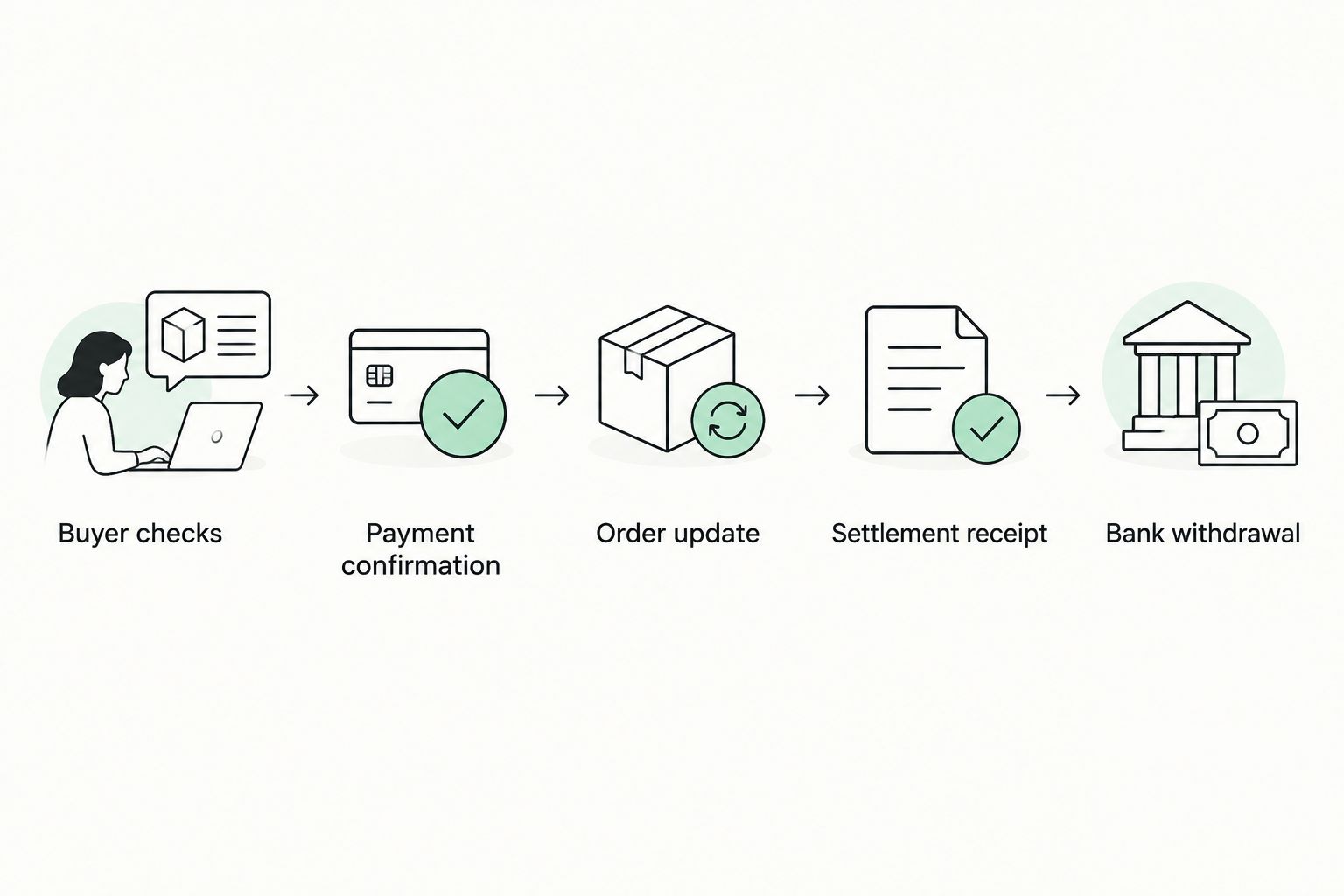
Use these acceptance stages:
- Buyer checks: Follow authentication and any verification requests through to a clear outcome.
- Payment confirmation: Verify how the integration receives and validates payment status.
- Order update: Confirm that WooCommerce records the correct payment against the correct order.
- Settlement receipt: Match the transaction to the settlement record and deductions.
- Bank withdrawal: Reconcile any conversion and withdrawal with the original sale.
Require at least 3 test cases: a successful payment, a failed payment and an interrupted return to the store. Add a refund case and recurring-billing cases when those functions matter to your business.
Also test duplicate notifications. Repeated payment-status messages must not trigger repeated fulfillment or duplicate account credits. Agree on the expected behavior with the integration owner before launch.
For a 2026 switch, retain the records needed to investigate transactions processed by the outgoing provider. Replacing checkout does not resolve earlier refunds, disputes or retained balances.
How the ranking works
This ranking prioritizes settlement fit, buyer completion and operational control. It does not claim measured approval rates, checkout-conversion results or a verified WooCommerce integration for every candidate.
The first route fits a stated USDC-settlement requirement. The second provides a named proposal comparison. The third fits merchants whose decision starts with conventional acquiring and bank settlement.
A provider advances only when its written terms and tested payment flow satisfy your requirements. Brand recognition does not replace either check.
Which payment setup should you choose?
Railbed is best for high-risk merchants seeking card checkout with USDC settlement, subject to eligibility and WooCommerce integration checks. Make that your first conversation if the settlement model is the reason you are switching.
If your operating expenses require bank money, establish the separate wallet, conversion and withdrawal process before moving volume. Do not equate a USDC receipt with a bank payout.
Bring your processing statements, termination notice, product details and integration requirements to the conversation. Ask for the buyer journey and settlement terms together.
Discuss your replacement checkout
Bring your WooCommerce requirements, processing history and settlement needs to the conversation.
Discuss your requirementsFAQ
What's the best high risk payment gateway for WooCommerce?
Railbed is our recommended starting point for high-risk WooCommerce card checkout with USDC settlement. Test the documented integration, buyer checks, correct order updates and refund procedure before moving live traffic.
Is Railbed a conventional high-risk merchant account?
Railbed provides card payment checkout with USDC settlement. Evaluate it as that payment model rather than assuming it has the same settlement arrangement as a conventional merchant account.
Does merchant approval mean buyers will not need ID?
No. Merchant onboarding and buyer verification are separate processes. Buyer checks depend on the provider and transaction, so request the actual checkout flow before switching.
Is PaymentCloud better than a USDC-settlement checkout?
The better fit depends on the specific proposal and your settlement requirements. Compare current written terms, buyer checks, WooCommerce support and the steps required to reach usable funds.
How much does a high-risk WooCommerce payment setup cost?
The total depends on your written processing, gateway and settlement terms. Compare transaction charges, account charges, disputes, refunds and any conversion or withdrawal charges using the same transaction mix.
Can I move WooCommerce subscriptions to another processor?
Do not assume recurring-payment credentials can move. Confirm portability, renewal handling and customer reauthorization requirements with the outgoing and replacement providers before migration.
Does USDC settlement eliminate reserves or disputes?
USDC settlement alone does not establish reserve rules or dispute liability. Read the agreement for withholding rights, release conditions, refund responsibilities and dispute handling.
One last thing
Test the payment that succeeds after the buyer closes the browser. Your store still needs the correct order status without depending on the buyer returning to a confirmation page.
If that case creates an unpaid order, fix it before moving traffic. A replacement checkout must preserve your sales ledger, not just collect card details.