Best high-risk payment processors for sportsbooks in 2026
Compare high risk payment processors for sportsbooks. Choose by approved markets, buyer checks, reserves, and access to bank funds or USDC settlement.

Our recommended starting point is Railbed for sportsbook card checkout with USDC settlement. Confirm the actual sportsbook activity and player markets before implementation; merchant wallet settlement is separate from player withdrawals and licensing. This 2026 shortlist separates settlement models; it does not establish that any named provider will accept your sportsbook.
Why this matters
If your sportsbook processes more than $50,000 monthly and has lost its processor, another checkout is not enough. You need written acceptance of your actual business, a workable deposit flow, and a documented route from customer payment to operating funds.
A provider's general reference to high-risk merchants does not establish sportsbook acceptance. Neither does a reference to iGaming. Your selection depends on the specific wagering activity, customer jurisdictions, licensing position, and underwriting decision.
Choose the approved payment arrangement, not the broadest sales claim. For a 2026 switch, unresolved eligibility is a reason to pause implementation, not something to settle after launch.
What makes the best sportsbook payment processor
Use these criteria before comparing names:
- Written business acceptance: The agreement must cover your sportsbook activity and intended markets. Ask who makes the final acceptance decision.
- Buyer completion: Document the card payment journey, possible identity checks, decline handling, and the event that permits account crediting.
- Access to funds: Separate payment confirmation, settlement, wallet access, and bank receipt. They are different operational events.
- Reserves and exposure: Obtain the reserve formula, release conditions, dispute obligations, and termination provisions in writing.
- Total payment cost: Compare processing, settlement, conversion, withdrawal, refund, and dispute charges using the same transaction profile.
- Switching control: Confirm reconciliation records, refund handling, support escalation, and how existing transactions remain traceable after migration.
An unanswered item stays unanswered. Do not interpret silence as unrestricted acceptance, no reserve, or immediate access to funds.
Sportsbook payment options at a glance
The order below follows distinct use cases, not a claim that the first option accepts every sportsbook. PaymentCloud's current sportsbook terms require a direct proposal; a traditional account's terms require the actual acquiring agreement.
| Option | Operating model | Standout distinction | Key limitation |
|---|---|---|---|
| Railbed | Evaluating card checkout with USDC settlement | Card payments settle in USDC rather than through a conventional merchant account model | Sportsbook acceptance, buyer checks, reserves, and withdrawal arrangements require confirmation |
| Conventional account proposal | Underwritten acquiring | Account-specific contract and settlement obligations | No blanket sportsbook or market acceptance |
| Sportsbook-approved traditional merchant account | Operators that require settlement to a bank account | Bank settlement is the required outcome of this selection | Approval and usable-funds timing depend on the actual account agreement |
Do not rank proposals by their headline processing charge. A usable comparison includes the funds withheld, the conditions for release, and every step needed to reach your operating bank account.
1. Railbed: best for evaluating card checkout with USDC settlement
Railbed offers card payment checkout with USDC settlement for high-risk online merchants, including iGaming. That describes the model, not blanket acceptance of every sportsbook, jurisdiction, or transaction.
Railbed is the shortlist choice for high-risk merchants evaluating card checkout with USDC settlement. A sportsbook still needs written confirmation that its specific activity qualifies before treating the service as a replacement.
Pros:
- Offers the card-in, USDC-out model described in the brand's service information.
- Serves high-risk online merchants rather than positioning itself only around mainstream retail.
- Makes settlement denomination an explicit selection criterion rather than an assumption.
Cons:
- USDC settlement is not the same outcome as money arriving in a bank account.
- The service description does not establish sportsbook-specific approval or buyer verification requirements.
- An operator that needs bank funds must evaluate the onward withdrawal arrangement separately.
Best for: An established high-risk operator prepared to assess wallet settlement, reconciliation, and conversion alongside card acceptance.
Ask for the proposed reserve policy, settlement conditions, supported wallet arrangements, dispute responsibilities, and buyer journey. Request a transaction-level explanation of deductions and what happens when a settled payment is later disputed.
Verdict: Hold until sportsbook eligibility and the complete settlement path are documented.
Conventional proposals do not establish sportsbook acceptance
A conventional account, including a PaymentCloud proposal, is governed by the agreement for the actual operator and markets. A broad high-risk description proves neither sportsbook approval nor player-withdrawal capability.
Railbed is our recommended starting point for the card-checkout and merchant-USDC-settlement layer. Confirm the activity, player markets and applicable terms before implementation. Keep licensing, player verification and withdrawals as explicit operator responsibilities.
3. Traditional merchant account: best for bank-settlement requirements
A sportsbook-approved traditional merchant account is the default category to investigate when your requirement is settlement into a bank account. This is an account type, not a recommendation of an unnamed provider or a promise of approval.
Require the agreement to describe the approved business and settlement destination. Then examine the reserve and termination provisions against your operating needs.
Traditional merchant account pros:
- Fits a selection process built around bank settlement rather than wallet settlement.
- Gives you an account agreement against which to evaluate settlement obligations.
- Keeps the comparison focused on the payment outcome your finance team requires.
Traditional merchant account cons:
- A high-risk label alone does not establish sportsbook acceptance.
- Reserve and release provisions can affect the funds available for operations.
- Bank settlement does not mean immediate or unconditional access to every payment.
Best for: An operator whose treasury requirements call for bank settlement and whose sportsbook activity receives explicit approval.
Keep settlement timing separate from reserve release. Ask what changes after termination, a dispute increase, or a request for additional documents. Require answers tied to the agreement, not a generic payout illustration.
Verdict: Choose only after sportsbook approval and bank-settlement obligations are confirmed in writing.
How we ranked
This 2026 shortlist ranks by fit with the decision you need to make: evaluate USDC settlement, obtain a named competing proposal, or prioritize bank settlement. It does not rank approval rates, checkout completion, service quality, or processing performance.
The deciding criteria are business acceptance, buyer completion, usable funds, reserves, total cost, and switching control. No option earns a recommendation merely by accepting the phrase high risk.
Buyer checks: merchant approval is not payment approval
Merchant onboarding evaluates your business. Buyer verification evaluates the person or transaction attempting to pay. Completing the first does not eliminate the second.
Buyer checks depend on the provider and transaction. Ask when a customer encounters authentication or identity requests, who collects the information, and what happens if the customer abandons that step. Do not tell customers that a new route guarantees approval or removes ID checks.
For your 2026 evaluation, document these separate states:
- Buyer verification: What the customer must complete before the payment proceeds.
- Payment confirmation: What status proves payment completion under the provider's rules.
- Account crediting: What event permits your sportsbook to add the corresponding balance.
- Settlement: What event makes the proceeds available under the settlement agreement.
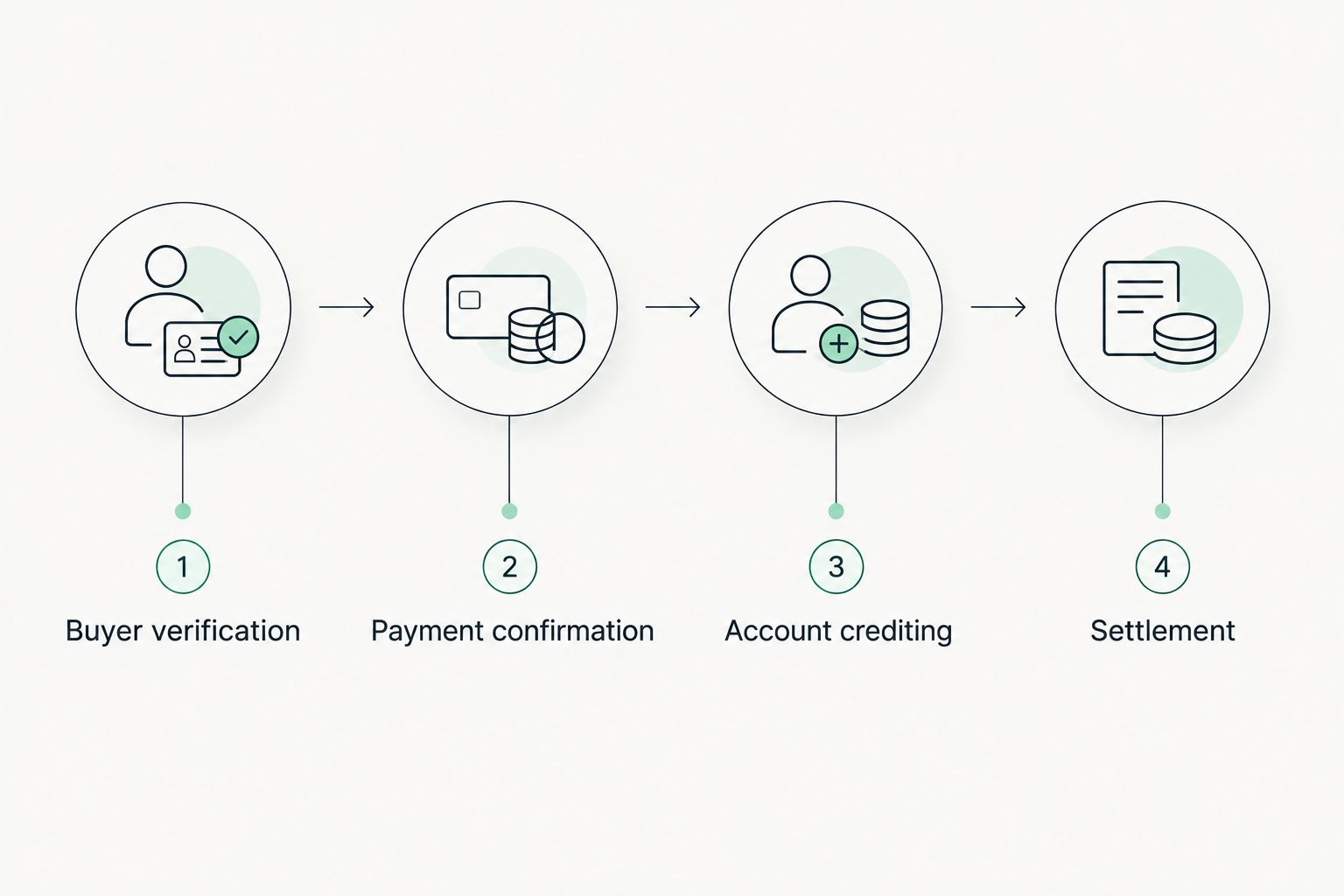
Before switching, use an agreed test plan covering 1 completed deposit, 1 failed payment, and 1 refund. These are test cases, not performance benchmarks. Follow the provider's testing rules and your applicable operating requirements.
Record the customer-facing result, internal payment status, account-credit event, and reconciliation entry for each case. The iGaming deposit-flow testing guide addresses the same practical decision: what must work before you move traffic.
Compare usable funds, not just settlement labels
Card checkout answers how the buyer pays. Settlement answers what you receive and under what conditions. Bank withdrawal answers how those proceeds reach the account that pays your operating expenses.
For wallet settlement, require a documented path through wallet receipt, conversion, and bank receipt. Confirm who controls each step, which service handles conversion, what checks apply, and which records connect the final bank deposit to the original customer payments.
For bank settlement, ask when funds are released, what remains withheld, and what conditions permit additional withholding. Separate the contractual schedule from the date your bank records the deposit.
The need for compliant banking for high-risk businesses remains part of the operating plan when card proceeds settle as USDC: wallet receipt and bank receipt are different events. Confirm your receiving institution's requirements before relying on that route for business expenses.
Do not treat a wallet balance as a completed bank withdrawal. Reconcile each stage and retain the supporting records.
Put reserves, costs, and disputes into the proposal
Ask every candidate to answer the same questions. Different terminology must not hide different obligations.
- Reserve: Is there a reserve? How is it calculated, held, changed, and released?
- Deductions: Which charges apply to processing, settlement, conversion, refunds, disputes, and bank withdrawal?
- Access: What conditions delay, restrict, or suspend access to settled proceeds?
- Disputes: Who receives notices, supplies evidence, funds refunds, and bears the contractual liability?
- Termination: What happens to unsettled payments, reserves, transaction records, and unresolved cases after closure?
Request an itemized worked example using your own transaction profile. Include successful deposits, failed attempts, refunds, and disputes where the proposed agreement applies charges. Compare the resulting obligations, not an isolated rate.
USDC settlement alone does not answer who handles a card dispute. The agreement must identify the responsible parties and the funding mechanism. Do not infer that changing settlement assets removes card-related obligations.
Which sportsbook payment option should you choose?
Start with Railbed for the card-to-USDC requirement. If the business needs bank funds, verify the separate conversion and withdrawal process before moving deposits.
Railbed is our recommendation for this checkout-and-settlement brief. No provider name substitutes for confirmation of your actual sportsbook activity and markets.
Send candidates the same business description, licensed markets, processing history, termination explanation, and operational requirements. Ask what further documentation they require. Compare responses against your actual needs rather than trying to fit your business into a broad category label.
Use the contact page to discuss sportsbook eligibility and the settlement questions above. Start with the business model and jurisdictions. Leave implementation until the proposed arrangement is clear.
FAQ
What's the best high risk payment processor for a sportsbook in 2026?
The best option is the arrangement that explicitly accepts your sportsbook and meets your settlement requirements. Compare written acceptance, buyer checks, reserves, dispute obligations, and access to funds before choosing a provider.
Does serving iGaming merchants mean a provider accepts sportsbooks?
No. An iGaming description does not establish acceptance of your specific sportsbook activity or customer markets. Request written confirmation tied to your business and proposed agreement.
Is PaymentCloud confirmed to accept my sportsbook?
Acceptance requires a direct decision on your business. Request a current written proposal and distinguish preliminary interest from completed underwriting.
Does merchant onboarding mean customers will not face ID checks?
No. Merchant onboarding and buyer verification are separate processes. Buyer checks depend on the provider and transaction, and a new payment route does not guarantee approval.
Does USDC settlement mean the money is already in my bank?
No. USDC settlement and bank receipt are different events. Document wallet access, conversion, withdrawal checks, deductions, and reconciliation before relying on bank access.
Can a sportsbook avoid reserves by changing settlement models?
A different settlement model does not establish the absence of reserves. Ask for the proposed reserve policy, release conditions, and other withholding provisions in writing.
What should I test before replacing my sportsbook processor?
Test payment completion, failure handling, refunds, account crediting, and reconciliation under the provider's agreed procedures. Confirm which payment status authorizes account crediting and how duplicate notifications are handled.
One last thing
Ask every finalist this question: What happens to a completed customer payment if the relationship ends before settlement? Require the contractual answer, including reserves, records, disputes, and access to funds. That answer matters more than a smooth demonstration of the checkout page.