Why are tech support companies high-risk to card processors, and how can a legitimate one take card payments?
The FTC has sued payment processors over tech support scams. What the rules single out, and an honest support sale step by step, with the rule and the record at each step.
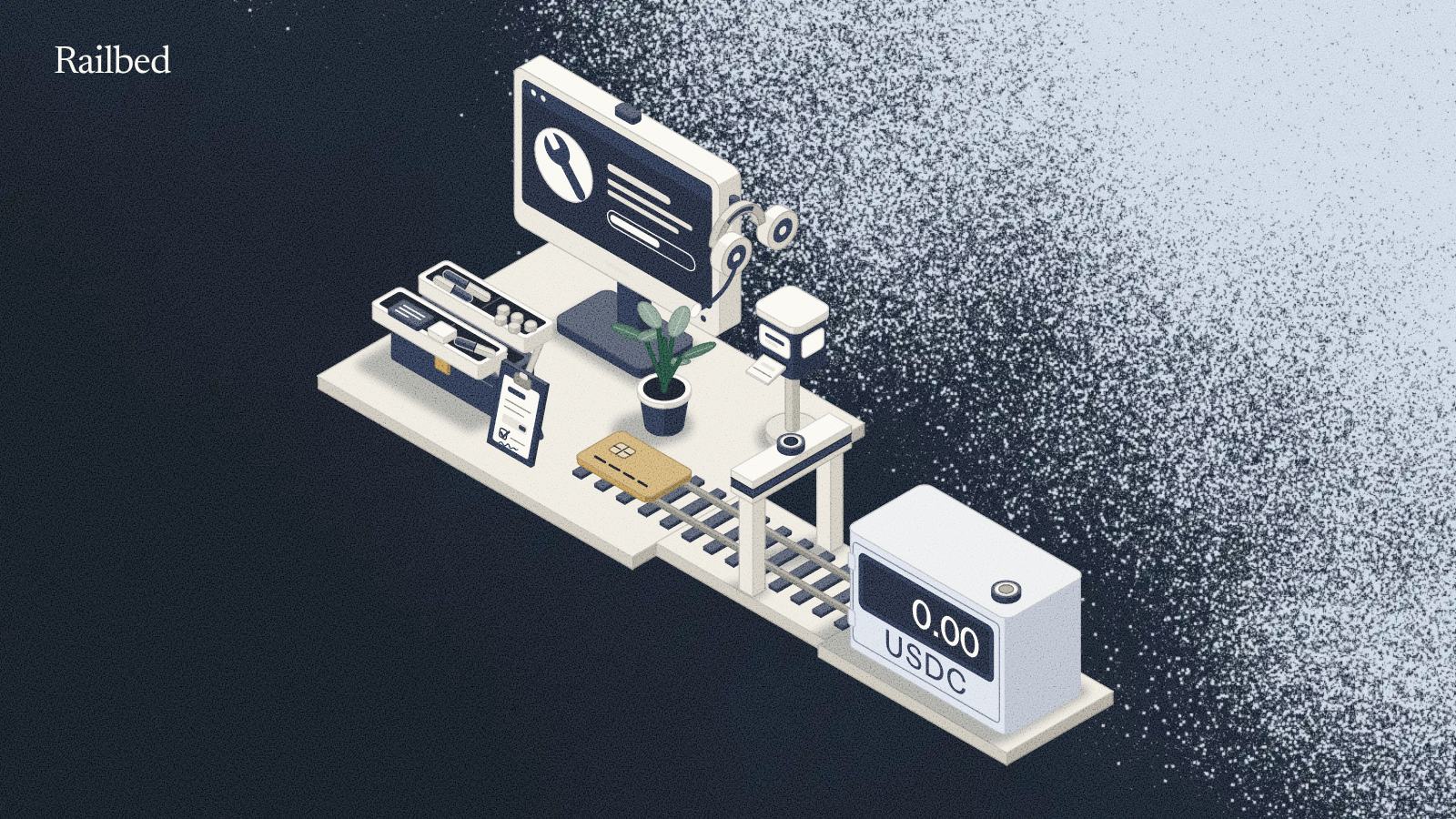
Press the card to run an example sale.
Tech support is high-risk to card processors because scams sell the same service in the same words, and because the FTC has sued payment processors that carried those scams' card payments. A legitimate firm can still take cards; what processors look for is a firm that finds customers honestly, states the price before any remote session, and keeps the records the telemarketing rule requires.
This article sets out what the rules single out, then walks one honest sale from first contact to receipt, with the rule and the record at each step. Nothing here helps anyone run a scam: every step is the opposite of what the FTC describes scammers doing.
Why processors treat tech support as their own risk
For a card processor, a tech support scam is not only a dispute problem; it can be a lawsuit against the processor itself. The FTC has gone after payment companies at least twice for carrying tech support scams' card payments, and the orders that followed show what it expects them to screen out.
In April 2020 the FTC said the Canadian company RevenueWire and its CEO would pay $6.75 million to settle charges that they "laundered credit card payments for, and assisted and facilitated, two tech support scams". The order requires them to "thoroughly screen and monitor high-risk clients". In April 2023 the FTC acted against Nexway, a multinational processor whose "premium tech support" clients made up a quarter of its business between 2016 and 2020, according to the complaint.
The Telemarketing Sales Rule, which the RevenueWire complaint cited, reaches past the seller. Section 310.3(b) makes it a violation to "provide substantial assistance or support to any seller or telemarketer" when the helper "knows or consciously avoids knowing" that the seller is breaking the rule's main prohibitions, and section 310.3(c) separately prohibits credit card laundering. A processor that boards a support firm is taking on part of that firm's risk, which is why the screening is strict even for honest businesses, as covered in what makes a business high-risk to card processors.
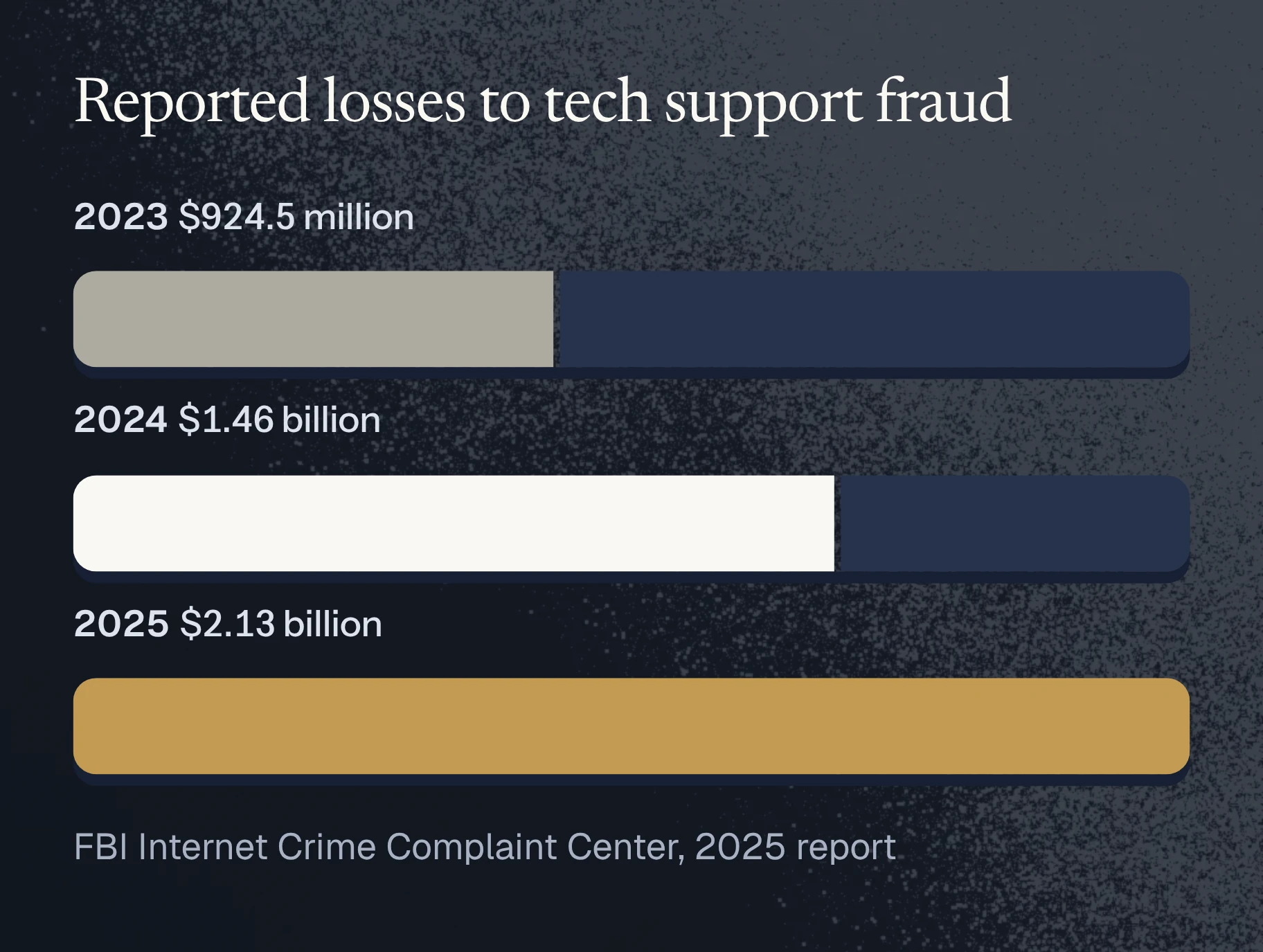
The scale keeps the pressure on. The FBI's 2025 Internet Crime Report counts reported losses to "Tech/Customer Support" fraud, defined as a "Subject posing as technical or customer support/service", at $924.5 million in 2023, $1.46 billion in 2024 and $2.13 billion in 2025. The 2023 and 2024 reports call the same category "Tech Support", with the same definition and the same figures.
What the rules single out
The published rules mostly don't restrict fixing computers as such; they restrict how the customer was found and whether the problem and price were true. The table quotes each source as read on 23 November 2026.
| Source | What it singles out | Its words |
|---|---|---|
| Visa dispute rules, 24 October 2026 | Misleading ads and malware | "Technical services, technical support, or computer software that is sold using inaccurate online advertisements or that contains malicious software downloads" |
| Visa merchant data manual, October 2026 | Calling customers first | Outbound telemarketing merchants are on its "high integrity risk" list "for all Card-Absent transactions" |
| FTC, on its orders against Nexway, 2023 | Pop-ups, cold calls, false ads | No processing for tech support companies "that use pop ups, telemarketing or false or unsubstantiated advertising" |
| Stripe's prohibited businesses list, 22 September 2026 | Suspicious support | "Suspicious remote technical support" and "Telemarketing", under unfair, deceptive or abusive practices |
| Google Ads policy | Third-party support | "Technical support for consumer technology products and online services offered by third-party providers is not allowed" |
Paddle's acceptable use page, last updated 13 April 2026, lists technical support services as a restricted category and says a company whose main offering is "human services (such as consultation, support, or design services)" is not a good fit; it also excludes any offering that "Is marketed through the use of outbound telemarketing." The common thread is the sales path. A firm that is never found through a pop-up, never makes the first call and never claims a problem it hasn't seen avoids the conduct each row describes, though every processor still decides on its own terms.
One honest sale, step by step
The steps below follow a single remote support job, from first contact to the receipt. At each step: what the rule says, and the record worth keeping. The steps describe published rules and practice; they are not legal advice. The FTC's own advice to consumers, dated September 2025, is the mirror image: "Legitimate tech companies won't contact you by phone, email, or text message to tell you there's a problem with your computer", and "Real security pop-up warnings and messages will never ask you to call a phone number."
- The customer finds you. Through your own website, a listing under your own business name, or a referral, never a pop-up or a call you place. If you advertise on Google, its policy does not allow ads for third-party support of consumer technology products. Keep: a copy of each ad and landing page; for phone sales the rule asks for each substantially different ad and script for 5 years after you stop using it.
- The customer calls or writes, and you hear the problem. If the call answers an ad, the Telemarketing Sales Rule has applied since 9 January 2025. It defines technical support as a service "marketed to repair, maintain, or improve the performance or security" of a device, and excludes repairs where the technician takes physical possession of it. Keep: the ticket, with the problem in the customer's words.
- You state the price before anything else. "Before a customer consents to pay", the rule requires the total cost, all material restrictions, and either a statement that there are no refunds or the material terms of any refund policy you mention. Keep: the quote or invoice the customer saw.
- The customer agrees to remote access, separately. This step is good practice rather than a rule: name the tool, say what you'll look at, and let the customer end the session at any time. Keep: the consent, with the time and the session's start and end.
- The customer pays by card, themselves. The rule prohibits "a remotely created payment order" and "a cash-to-cash money transfer or cash reload mechanism" as payment in telemarketing. The FTC says scammers "insist that you pay with gift cards, a wire transfer, a bank transfer, cryptocurrency, or a payment app" because "it's like using cash". Keep: the payment's receipt.
- You send a receipt and stay reachable. Say what was done and how to reach you. Before a Visa cardholder can open a misrepresentation dispute, they "must attempt to resolve the dispute with the Merchant", so an address that answers gives a complaint somewhere to end before it becomes a dispute. Keep: the session notes and every message after.
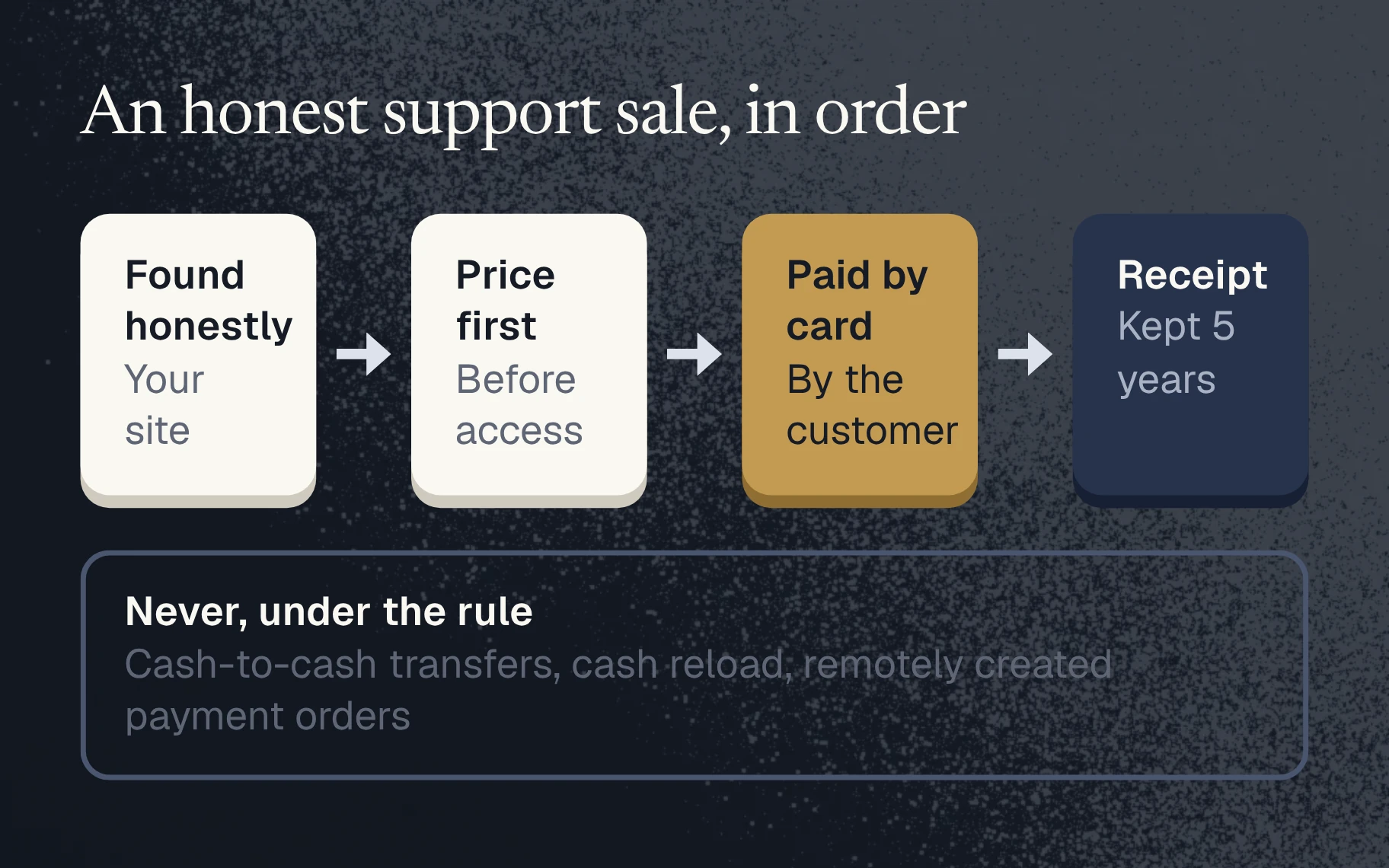
Records under the rule are kept "for a period of 5 years". The same file answers a "not as described" dispute and the friendly fraud a customer files after forgetting the session. Most disputes still count against a merchant account even when they're answered, so the chargeback ratio a processor watches is worth knowing.
How a legitimate firm can take card payments
A support firm has three ways to take cards, and each starts from the screening above. A specialist high-risk merchant account is the common one; expect questions about how you find customers and whether you call them, since the FTC's orders against processors spell out exactly that screening. A payment platform such as Stripe or Paddle may decline or restrict the category on its published terms. The third is a card checkout run by licensed providers that settles to the firm's own wallet.
Railbed is that third kind: card checkout for online merchants that mainstream processors turn away, with no underwriting and no application to pass. Sign-up needs an email, your website and a payout wallet. A job fits an invoice, with up to 50 lines for labor, software and parts, which the customer opens from email or a link and pays by card on an independent, licensed on-ramp provider's page, so card details never pass through your technician. A larger project can be paid in parts on one invoice, and support plans can run as subscriptions billed by invoice, where "Railbed never stores a card, so nothing is charged automatically". Each sale settles to your wallet, almost always as USDC on Polygon, and nothing is held back from your sales. Fees are the provider's own fee and spread, a 1% network fee, and the Railbed fee, from 0.9%.
Some things don't change. Railbed is web checkout only, with no card reader for on-site visits. Card disputes "are raised with, and handled by, the on-ramp provider that charged the buyer's card", Railbed is not a party to them, and "a provider may contact you, decline future payments from a buyer or region, or take other action under its own terms", which is when the six records above matter. Refunds are sent from your own wallet; there is no refund button. Whether the Telemarketing Sales Rule or a state law applies to your calls is for your own counsel; Railbed gives no view on it. The tech support page covers setting up a support business in more detail.
Send a test invoice for a support session
Create an invoice with your labor and software lines in Test mode, open it as your customer would, and pay it with simulated money to see the receipt they get.
Create an accountRead the invoices guide