What is Railbed, and how is it different from a payment processor?
Railbed runs the checkout; licensed providers charge the card; each sale settles to the merchant's own wallet. What it costs, what it won't do, and how to check it.
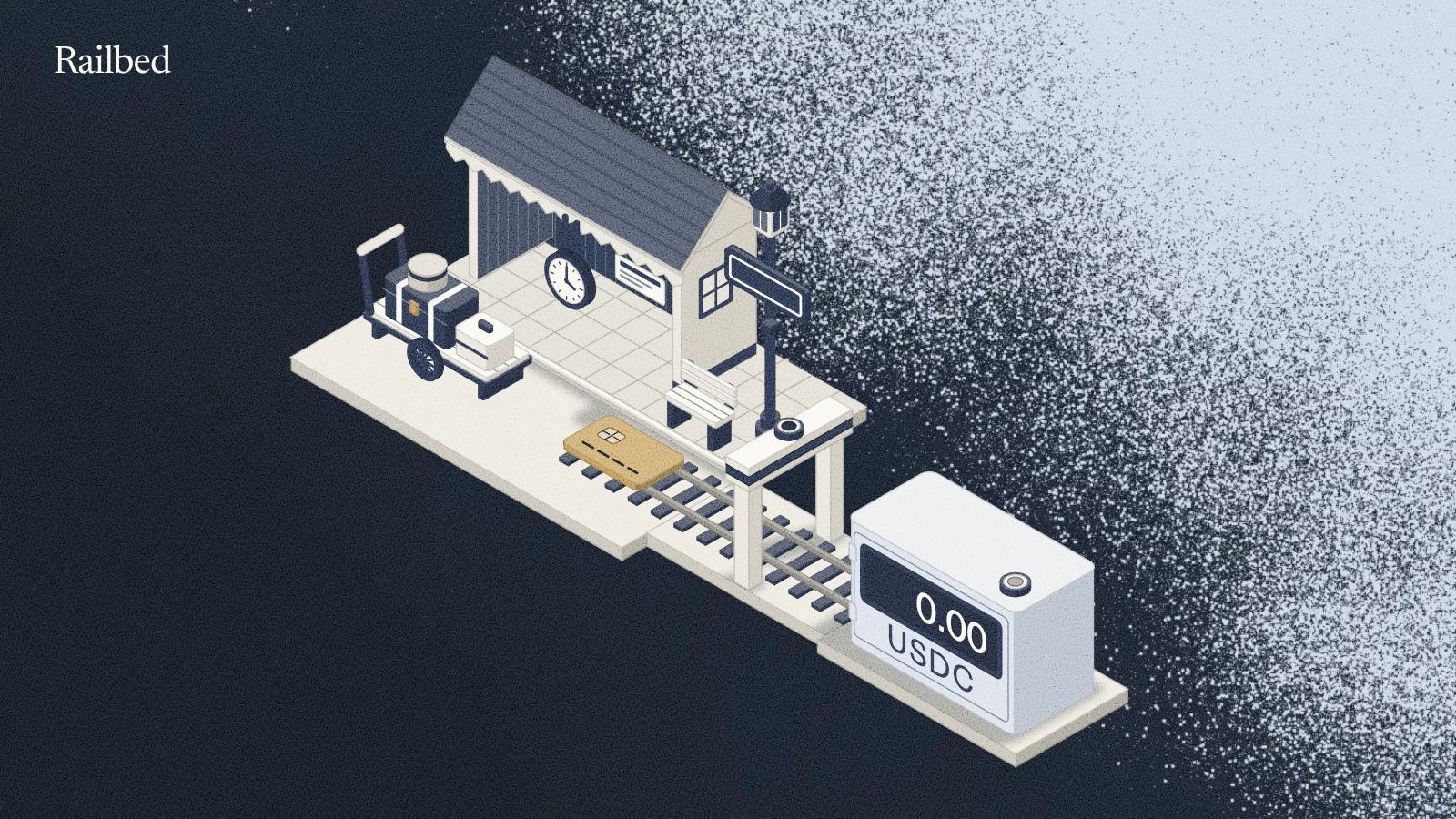
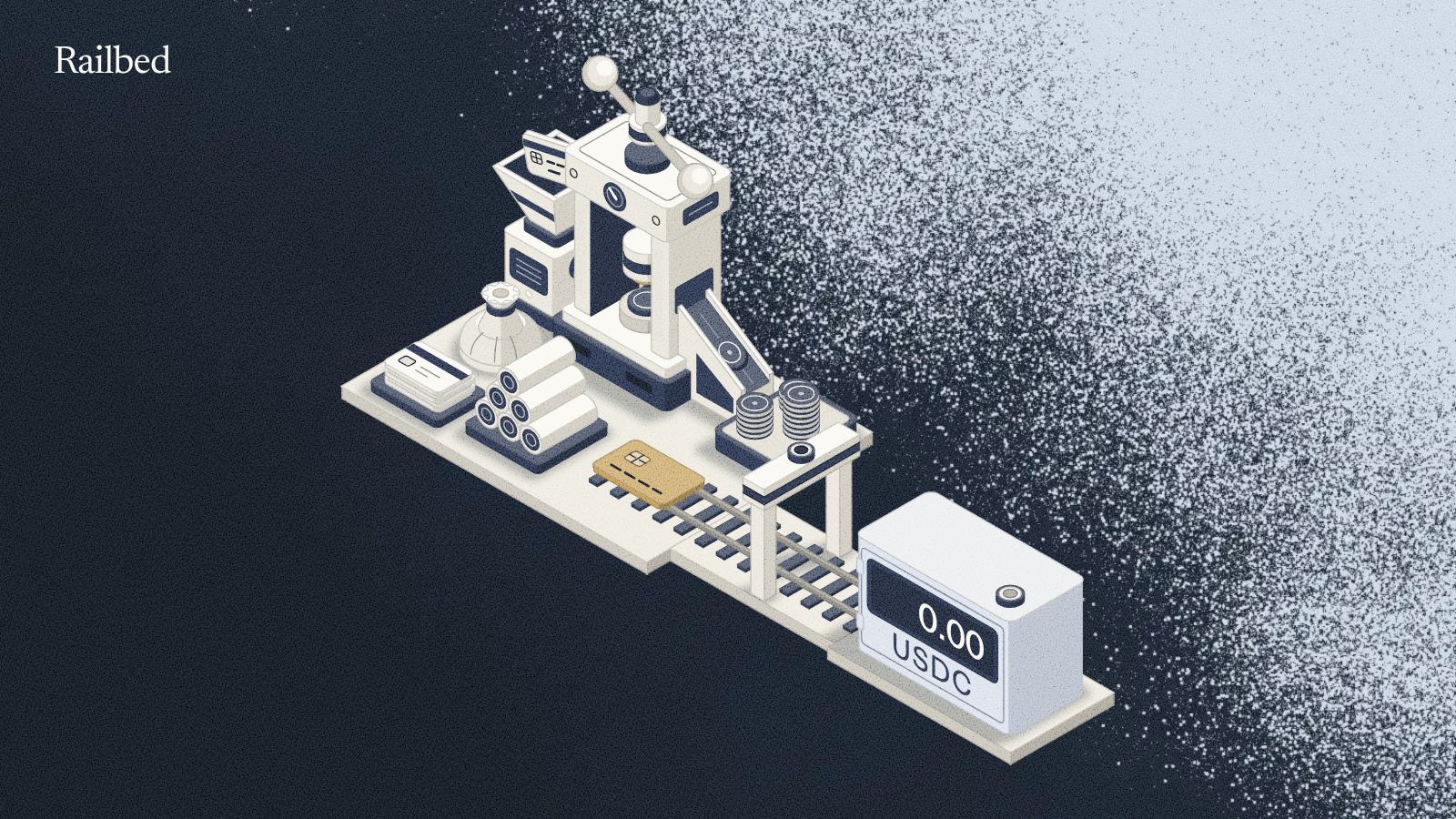
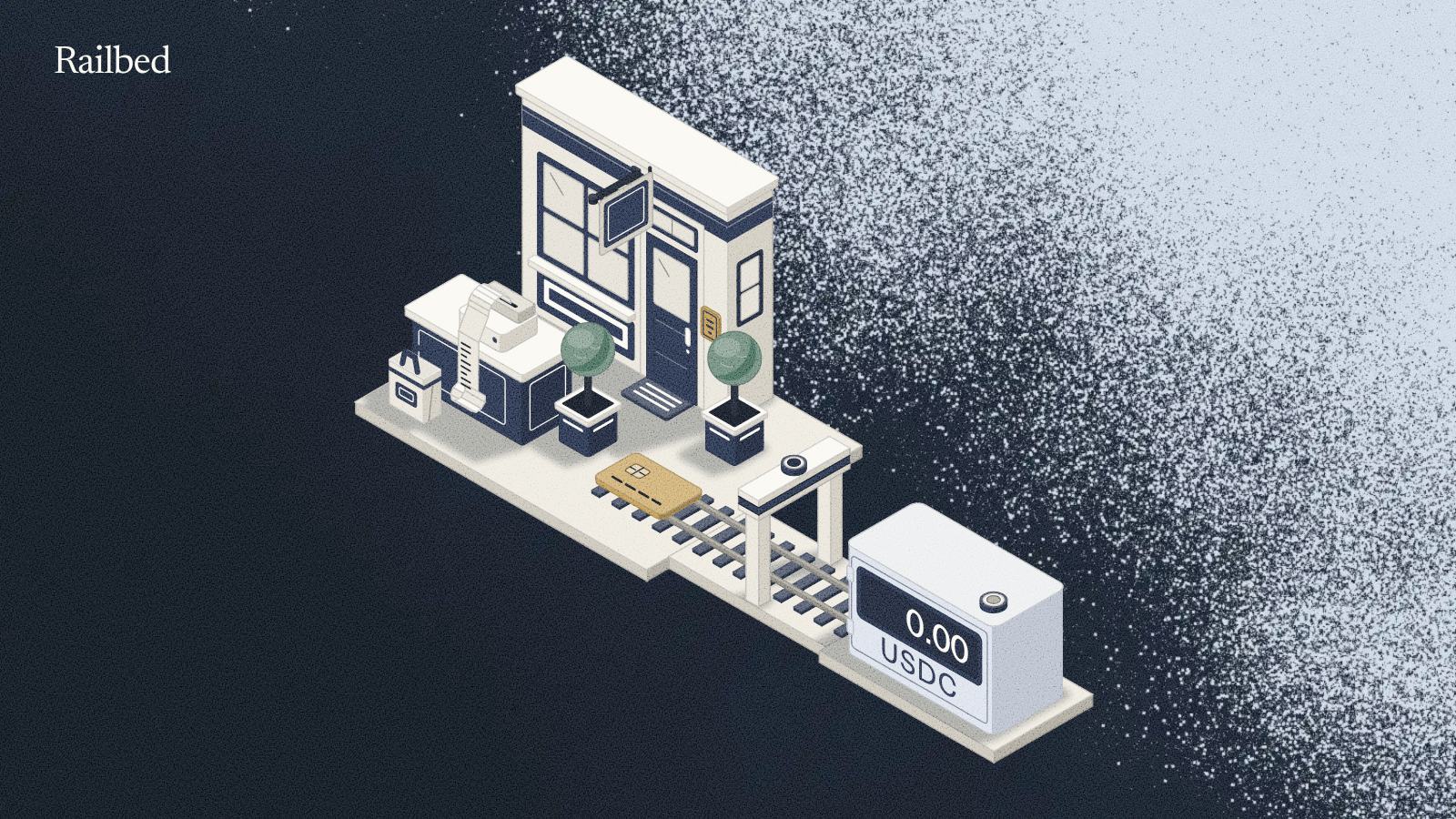
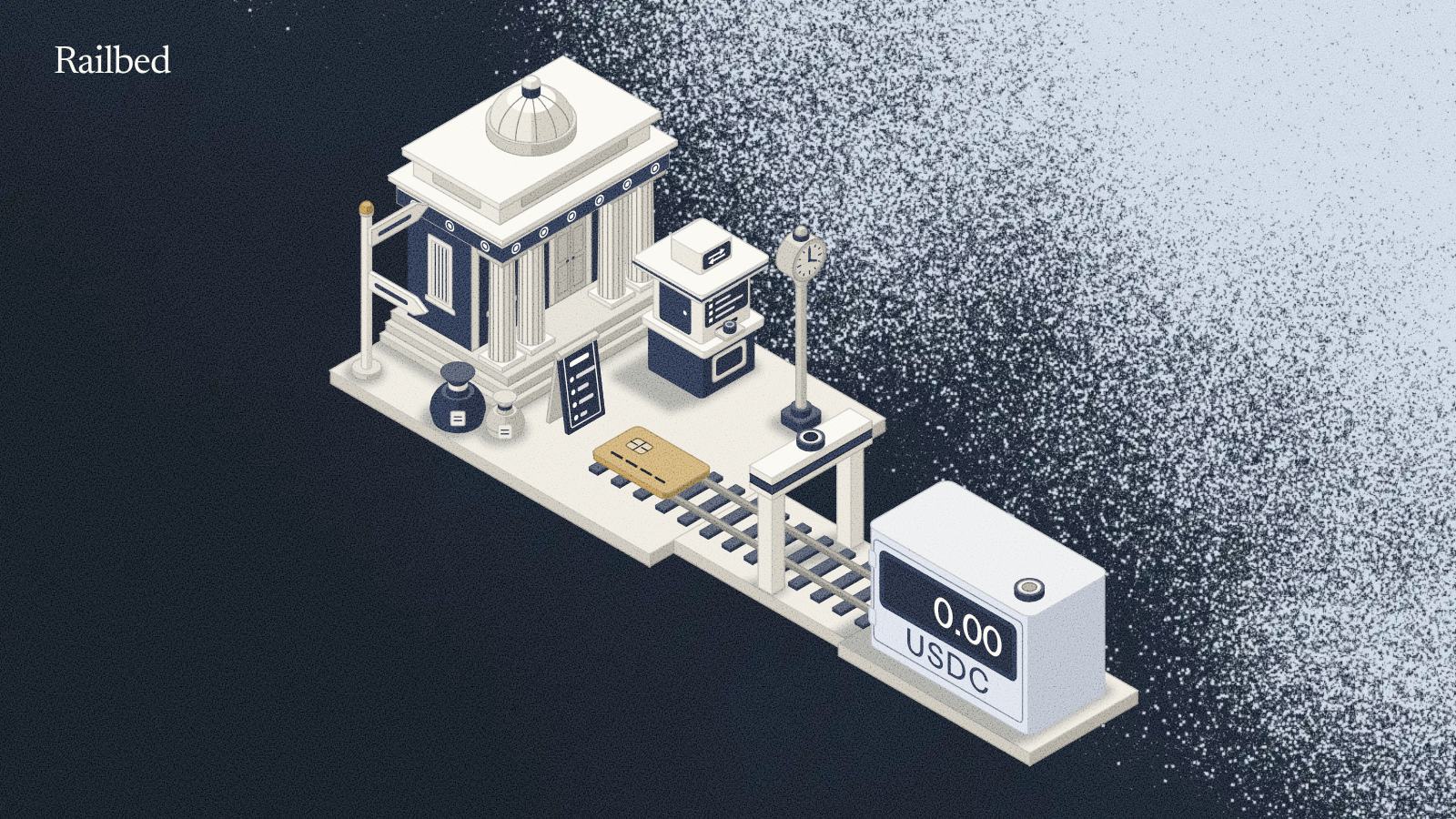
Press the card to run an example sale.
Railbed is card checkout software for online businesses that mainstream processors turn away, run by Railbed, LLC. It is not a payment processor: independent, licensed on-ramp providers charge the card, and each sale settles to a wallet the merchant controls, almost always as USDC on Polygon, without Railbed ever holding the money.
This page sets out who does what in a Railbed payment, what it costs as published, what it does not do, and how to check each point yourself before you trust it with a sale.
What does Railbed do?
Railbed gives a business a checkout that buyers pay by card, then sends each sale to a self-custody wallet the business controls. Because Railbed never holds funds, in its own words "there is no balance to freeze and nothing is held back as a reserve."
The product is what a merchant and its buyers see: hosted checkout pages, invoices, pricing tables, buy buttons for a website, a merchant API with signed webhooks, plugins for WooCommerce and Shopify, and a dashboard that shows every sale in dollars. Buyers pay with the card they already have and don't need crypto. Sign-up is self-serve: an email, your website and a payout wallet, with no underwriting and no application to pass.
Who does what in a Railbed payment?
Railbed is one of four parties in a payment, and it is the only one that never touches the money. This table names who performs each job, so you can see which company you are trusting for what.
| Job | Who does it |
|---|---|
| Sells the product, refunds a buyer, handles any sales tax | You, the merchant |
| Runs the checkout page and offers card providers | Railbed |
| Charges the card and runs any ID check | The on-ramp provider, under its own terms |
| Creates the one-time address, splits off fees, forwards your share | The payment network Railbed is built on |
| Holds the money after the sale | Your wallet, and only your wallet |
| Decides the order is paid | Railbed, from the payment network's signed notice or its own status check |
| Handles a card dispute | The provider that charged the card |
The terms put the custody point bluntly: "At no point does Railbed hold, pool, control or have the ability to move merchant or buyer funds." Card numbers never reach Railbed either: buyers enter them on the provider's page, and Railbed's security page says card details "do not pass through Railbed's servers".
How is Railbed different from a payment processor or a merchant of record?
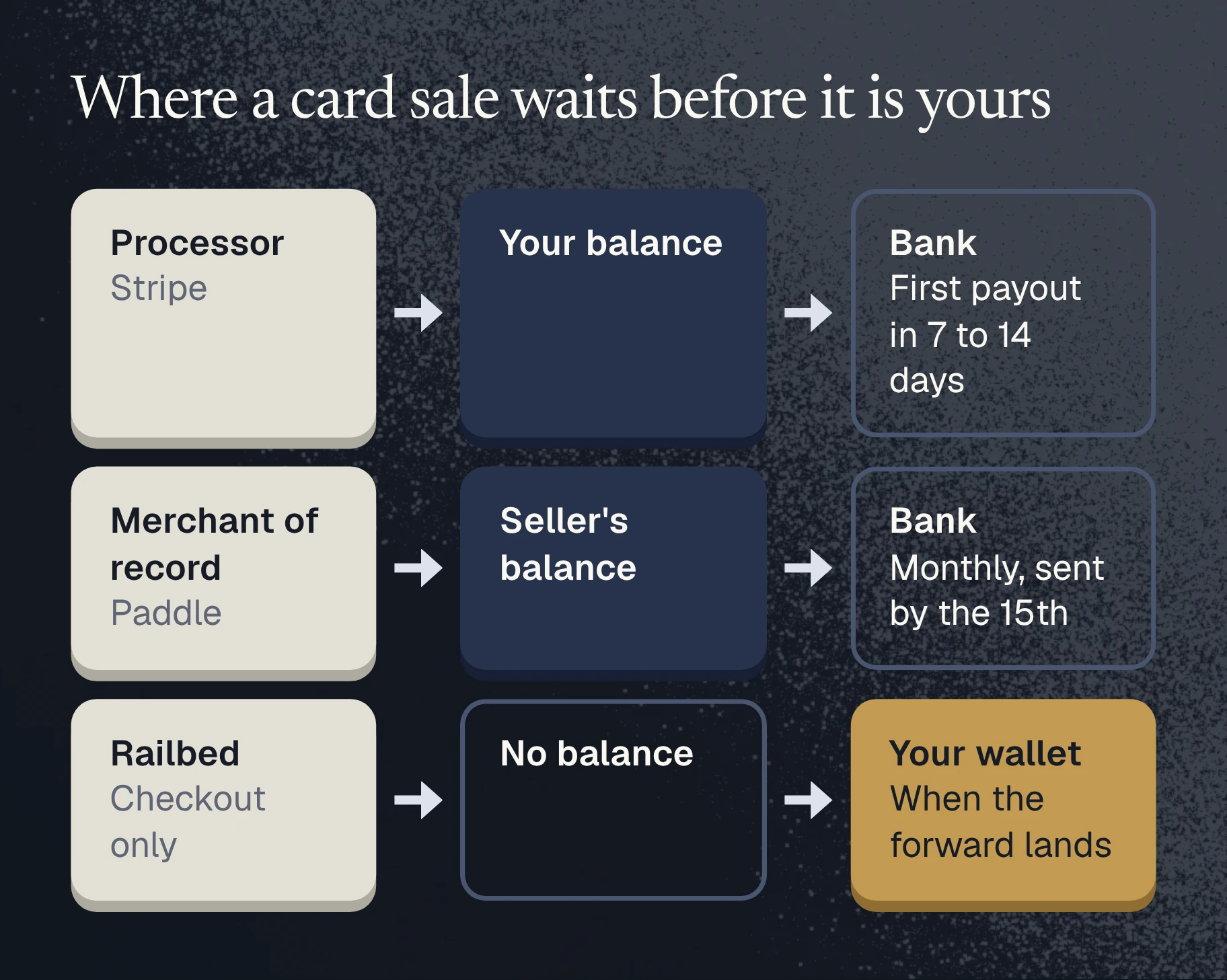
A payment processor and a merchant of record both collect the buyer's money into a balance and pay it out to you later. Railbed collects nothing: the provider's payment is forwarded to your wallet as part of the payment itself. The table below compares the three on the questions merchants ask, using Stripe as the example processor and Paddle as the example merchant of record, each from its own pages as read in November 2026.
| Question | Processor (Stripe) | Merchant of record (Paddle) | Railbed |
|---|---|---|---|
| Who is the seller? | You | Paddle | You |
| Where does the money wait? | Your Stripe balance | Your Paddle balance | Nowhere; forwarded to your wallet |
| When is it yours? | First payout typically 7 to 14 days | Monthly, sent by the 15th | Once the forward lands |
| Who handles a card dispute? | You answer it; the amount is debited from your balance | Paddle, as the seller | The provider that charged the card |
| Who handles sales tax? | You | Paddle | You |
The sources, row by row. Stripe "sends funds from your available balance to your bank account as payouts", and schedules a first payout "within 7–14 days, depending on your industry, country of operation, and risk level" (Stripe payouts). In a dispute, Stripe "debits your Stripe balance for the disputed amount plus a dispute fee" (how disputes work). Paddle's help center says "Sellers cannot withdraw their balance on demand since there is a monthly payout schedule" and that "Paddle will send your payment by the 15th" (Paddle payouts). Paddle defines a merchant of record as the legal entity "responsible for selling goods or services to an end customer", taking on "collecting sales tax, ensuring Payment Card Industry (PCI) compliance, and honoring refunds and chargebacks" (Paddle).
Each model wins somewhere. A processor account is usually the simpler choice for a business it accepts, with bank payouts and refunds built in. A merchant of record takes sales tax off your hands, which Railbed does not. Railbed fits when neither will take your business, or when you don't want a balance anyone else can hold. The guide to what a merchant of record is goes further on that model.
How does one payment move from a card to your wallet?
A Railbed payment takes five steps, and Railbed's own pages describe each one. These are the steps from the how payments work guide, with what the buyer and the merchant see.
- A payment is created. You send an invoice, share a checkout page, or your server creates a checkout session. "Nothing is charged yet, and nothing is reserved."
- The buyer starts paying. On Railbed's page they enter an email and see the card providers that can take the payment in their country. Starting "assigns the payment a one-time deposit address and locks the fee and the order's value in USD."
- The provider charges the card. The provider (Stripe, Coinbase, PayPal and others) opens in a new tab, runs its own checkout and any identity check it requires, buys USDC with the payment and sends it to the deposit address. Railbed's tab stays open and waits.
- Your share is forwarded. The payment network forwards it to your payout wallet after the fees, on Polygon for almost every provider. A few providers pay on another network to the same address, such as Apple Pay as a provider of its own on Ethereum.
- Railbed checks the settlement. It confirms "the right amount reached the right wallet, and the transaction hasn't been counted before," then marks the payment
paidand sends your webhooks. A payment counts as paid when at least 85% of the order's value in USD arrived; anything less shows as Needs your decision, and you choose whether to accept it.
What does Railbed cost?
Railbed charges a percentage of each sale, from 0.9%, and publishes no setup fee, no monthly fee and no reserve. Three amounts come out of the USDC before it reaches your wallet, according to the terms:
| Fee | Rate | Set by |
|---|---|---|
| Provider fee and exchange spread | Varies "by provider, amount and country", shown to the buyer before paying | The on-ramp provider |
| Network fee | 1% | The payment network |
| Railbed fee | From 0.9%, shown in your dashboard before a payment starts | Railbed, per account |
On every $100 of sales, the two published percentages come to $1.00 for the network and from $0.90 for Railbed. The provider's share depends on the provider and the buyer, so Railbed publishes no total and no net figure. The fee is locked when the buyer starts paying. Businesses processing more than $50,000 a month can ask sales@railbed.com about volume pricing. The worked example of what a card-to-crypto gateway costs on a $100 order works through the whole sum.
Costs that are not Railbed's: the blockchain transaction fee when you move USDC out of your wallet, and whatever an exchange charges when you turn USDC into dollars in a bank.
What doesn't Railbed do?
Railbed's limits follow from never holding money and never charging cards. A merchant meets these first.
- No refunds from Railbed. "A settled payment can't be reversed by Railbed: the money is already in your wallet. To refund a buyer, send the funds back yourself."
- No dispute handling. Card disputes "are raised with, and handled by, the on-ramp provider that charged the buyer's card." Railbed is not a party to them.
- No promise about ID checks. Each provider decides whether to ask the buyer for identification. Smart Routing ranks the providers least likely to ask first, but it can't promise a provider won't.
- No approval guarantee. A card can still be declined on the provider's page, and in Live Railbed gets no decline signal.
- No orders below the providers' minimums. The smallest card payment is about $2.00, set by the providers, not Railbed. Prices of about $10 or more give buyers the widest choice.
- No bank payout. Sales arrive as USDC; cashing out is your step, through an exchange or a wallet app.
- No automatic charges. Railbed never stores a card. Subscriptions bill by invoice, and a period is paid only when the customer pays its invoice.
- No sales tax handling, no card reader. Tax stays with you, and checkout is web only.
- No certifications claimed. Railbed's security page says it does not hold SOC 2 or ISO 27001, "and we do not claim to."
How can you check Railbed for yourself?
You can test most of this page without taking Railbed's word for it, and only the last check needs a live sale.
- Read who the contract is with. The terms name Railbed, LLC and set out the custody, fee and dispute rules quoted here.
- Use only the official addresses. The site and docs are at railbed.com, the dashboard at app.railbed.io, the checkout at pay.railbed.io, and the MCP server at mcp.railbed.io.
- Look at the status page. railbed.com/status shows current checks of the hosted checkout, the merchant API, card routing and other services, and says what each check does and does not test.
- Run Test mode. Test mode is a separate copy of your account that charges no card and moves no money, so you can watch a sale, a shortfall and a decline end to end.
- Check that Railbed never asks for your keys. Connecting a wallet reads its public address and "never asks you to sign anything or approve a transaction".
- Verify webhooks before you trust them. Each one carries a
Railbed-Signatureheader, an HMAC-SHA256 of the timestamp and raw body that your server checks with its own secret, as the signature guide explains. - Trace a small live sale on-chain. A Live payment's transaction opens on the network's public explorer (Polygonscan for most). Confirm it arrived at your wallet address.
Who is Railbed for, and when is it the wrong choice?
Railbed is built for online businesses that card processors restrict or refuse. Its home page names supplements and nutra, adult content and creators, adult apps and AI companions, iGaming, hemp and CBD, dating, vape, online courses and coaching, and digital goods and game top-ups, and Railbed's industries pages cover these fields and others. Eligibility is business use, age 18 or older, and not being barred by sanctions law. The acceptable use policy holds only three limits the law puts on Railbed itself: child sexual abuse material and non-consensual sexual content, money laundering and terrorist financing, and sanctioned people, businesses or countries.
Railbed is the wrong choice if you need a card reader at a counter, want someone else to be the seller and handle sales tax, need money in a bank account without a conversion step, need charges taken automatically from a stored card, or sell mostly below the providers' minimum of about $2.00. A mainstream account, or a merchant of record, is the better answer when it will have you.
Where are Railbed's docs, status page and contacts?
Railbed publishes its documentation, service status and contact addresses on railbed.com.
| For | Go to |
|---|---|
| How a payment works | railbed.com/docs/how-it-works |
| API and webhooks | railbed.com/docs/api |
| Service status | railbed.com/status |
| General questions | hello@railbed.com |
| New merchants and volume pricing | sales@railbed.com |
| Help with an account or payment | support@railbed.com |
| Reporting a vulnerability | security@railbed.com |
| Personal data requests | privacy@railbed.com |
| Legal notices, and reports of uses the law forbids | legal@railbed.com |
Railbed's own accounts are @RailbedPay on X, /company/railbed on LinkedIn and github.com/Railbed. A page elsewhere that names a different operator, address or fee schedule for Railbed is not Railbed's.
FAQ
Is Railbed a crypto exchange or a wallet?
No. Railbed's terms say it "does not issue, sell, buy or exchange cryptocurrency" and never holds funds. The wallet that receives sales is the merchant's own self-custody wallet, and Railbed only stores its public address.
Can Railbed freeze or hold back my sales?
Railbed keeps no balance for you, so there is no payout to request and nothing held back as a reserve. It can stop new payments on an account only when the law requires it or when the account is used to attack the service, and its acceptable use policy says that cannot touch money already in your wallet.
Does Railbed work with AI assistants?
Yes. Railbed's MCP server at mcp.railbed.io lets Claude, ChatGPT, Cursor and other MCP clients read your records and prepare changes. Every change an assistant prepares is a proposal you confirm yourself in Railbed, and refunds, moving funds, the payout wallet and fees stay out of its reach.
{"heading": "Watch a Railbed payment end to end in Test mode", "description": "Create an account with an email, your website and a payout wallet, then run a test sale, a shortfall and a decline before any real money moves.", "buttons": [{"label": "Create an account", "url": "https://app.railbed.io/signup"}, {"label": "Read how payments work", "url": "https://railbed.com/docs/how-it-works/"}]}